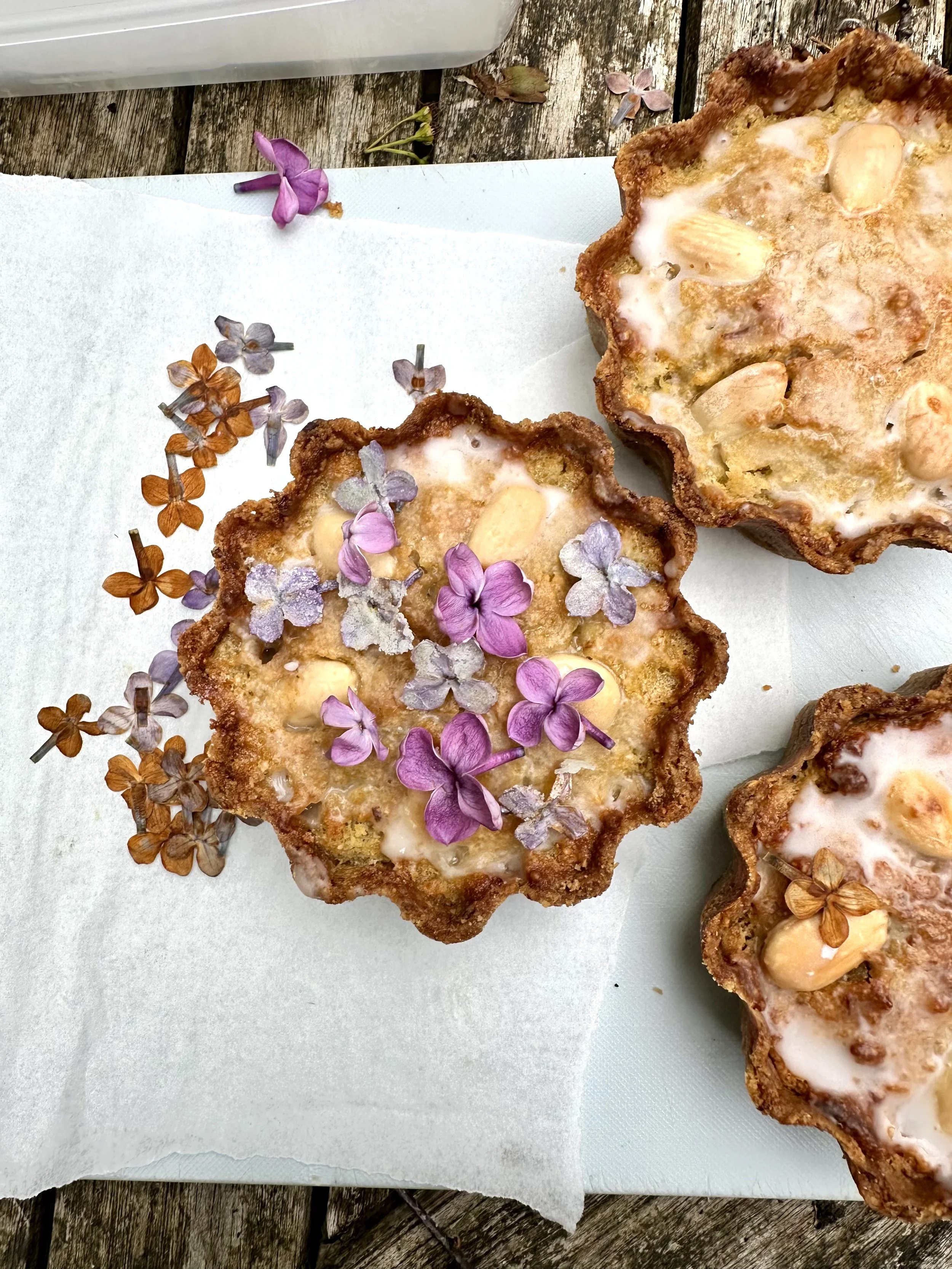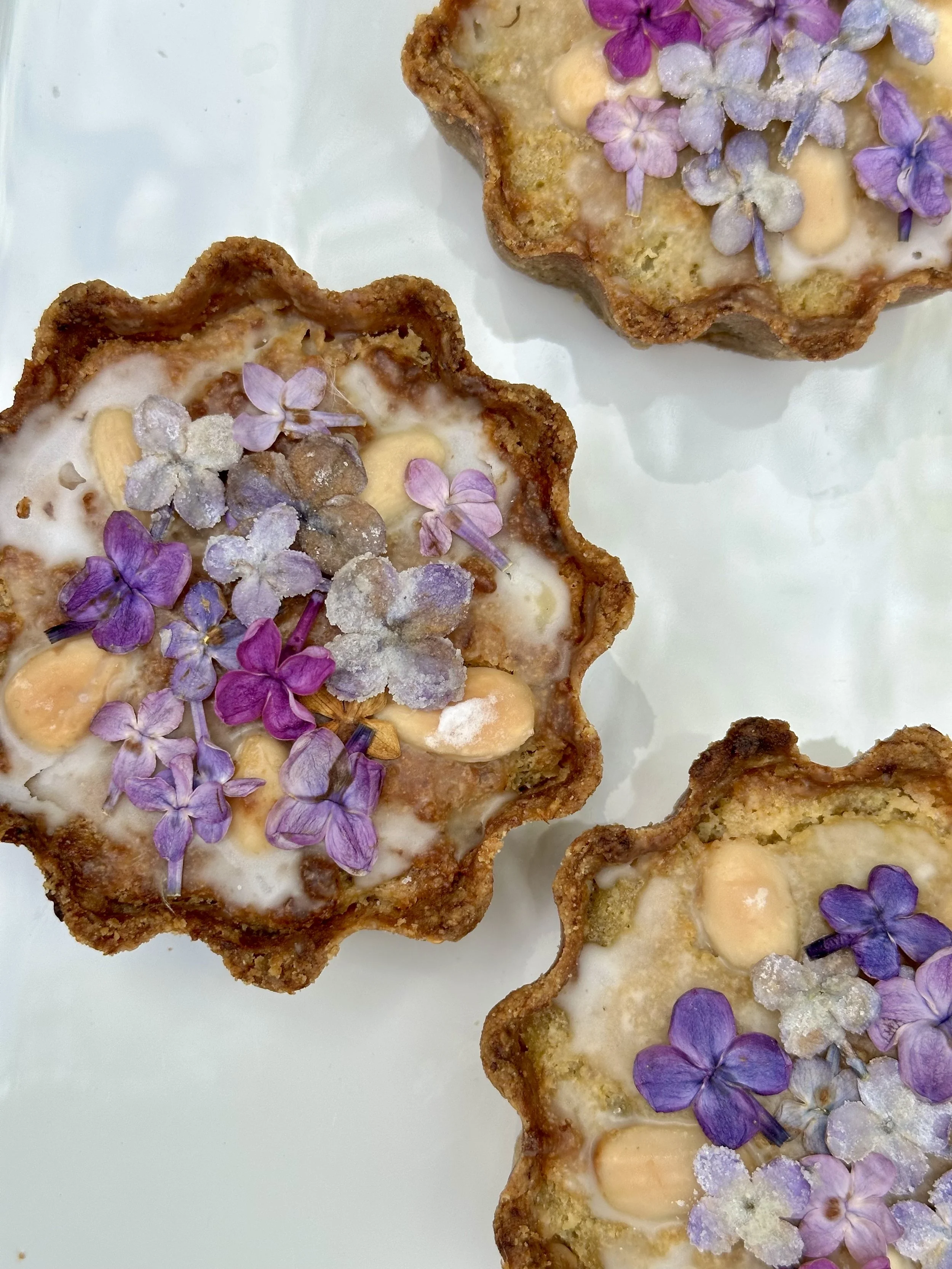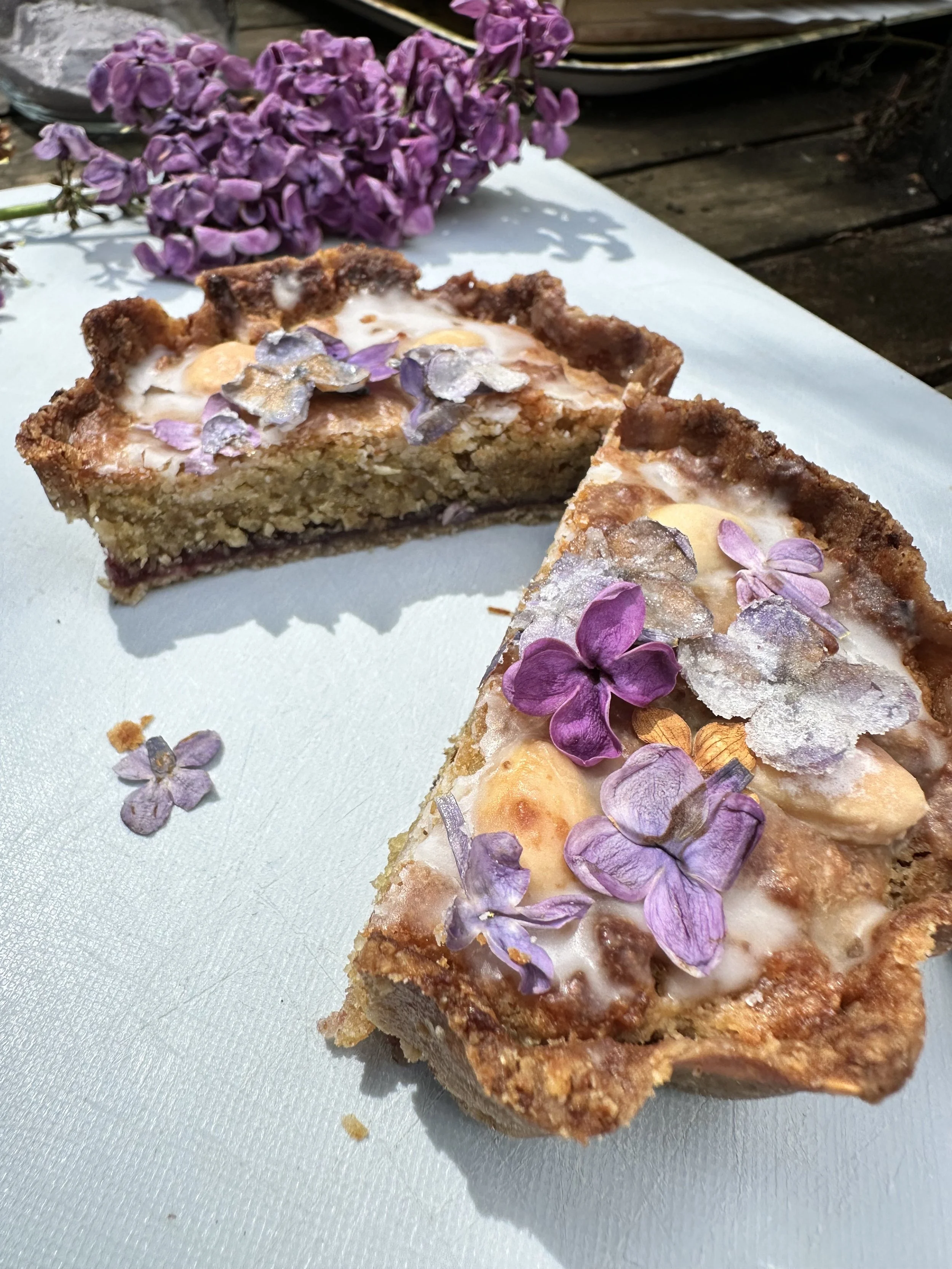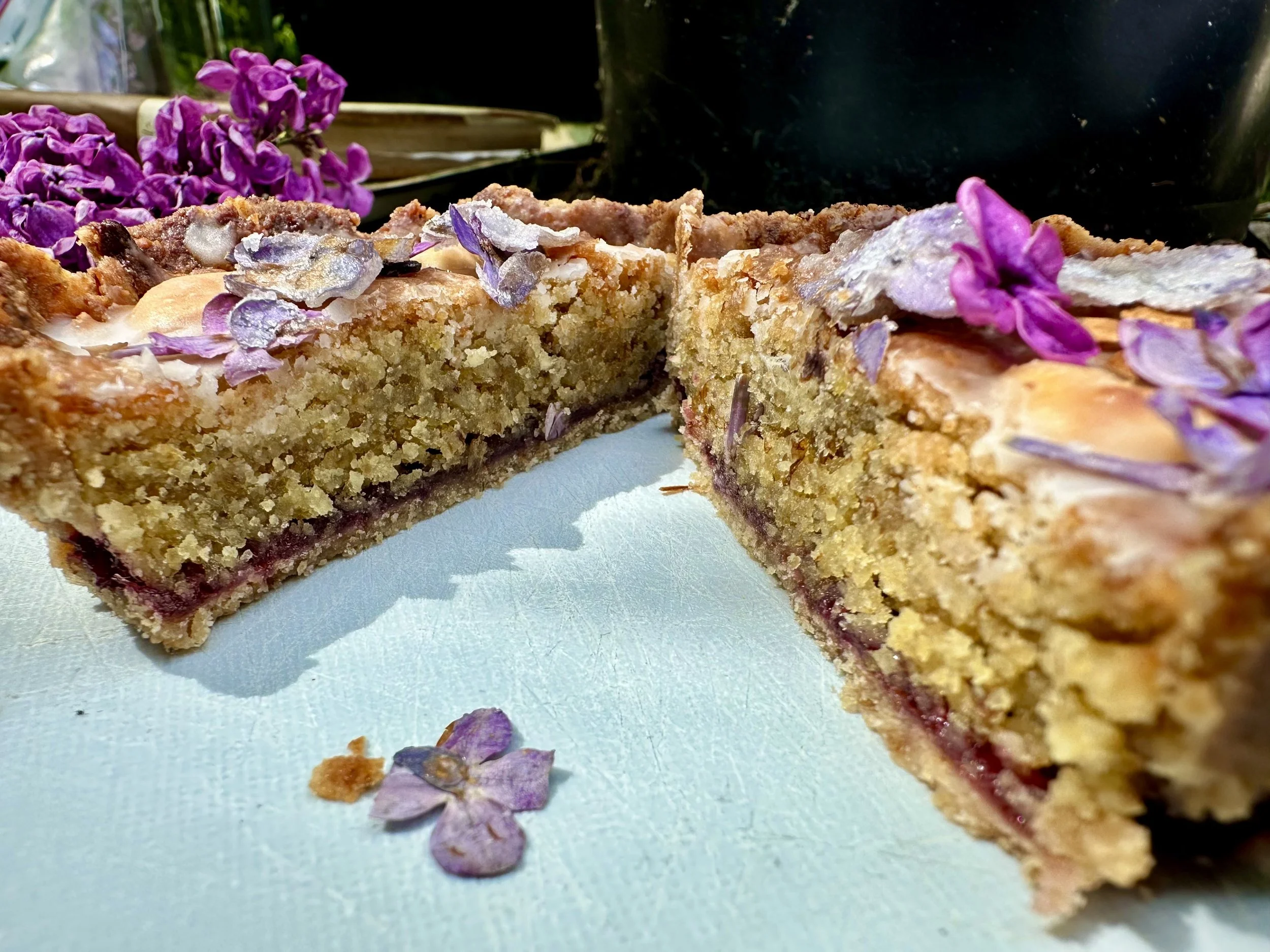
Lilac Frangipane
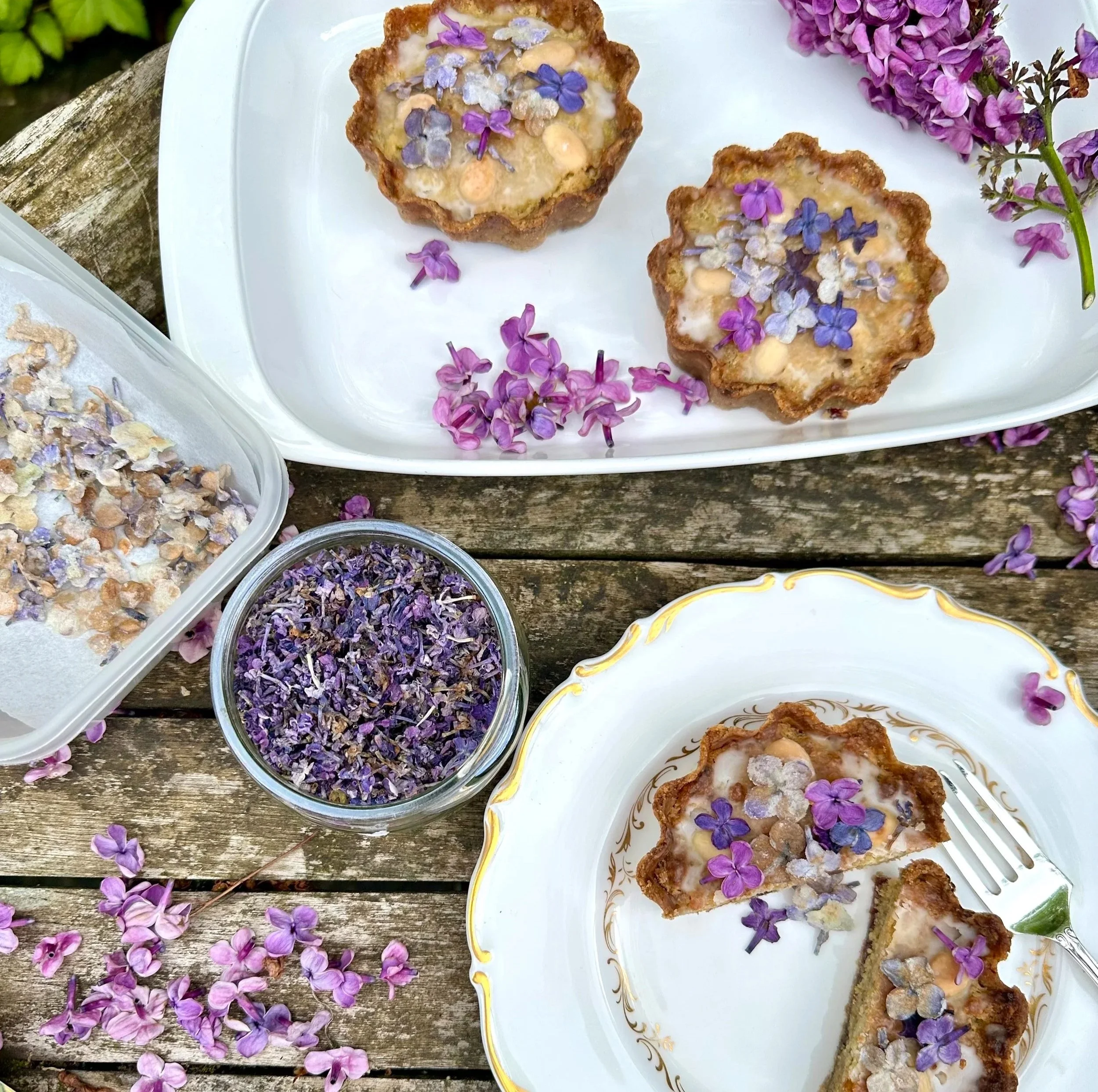
Frangipane or bakewell tart as it’s known in the UK is one of those traditional English desserts that you might have at an old fashioned tea party. Traditionally made with a shortcrust pastry, a layer of raspberry jam and a frangipane filling. It’s lightly baked and finished with a water icing. (Add it to the list of treats to experience on your next UK visit. You’ll find it nestled between the cucumber sandwiches and the clotted cream and scones).
If you are wondering how lilacs managed to sneak their way into this tart story, it’s because lilac season just finished in London and I’ve been wanting to combine my tart nostalgia with lilacs ever since I made my first lilac infused honey some years ago. The infused honey tastes like marzipan, and so, it took me back in time. Consequently, when I landed in London at the end of April and saw that lilacs were just starting to bloom, I wasted no time making lilac “everything”.
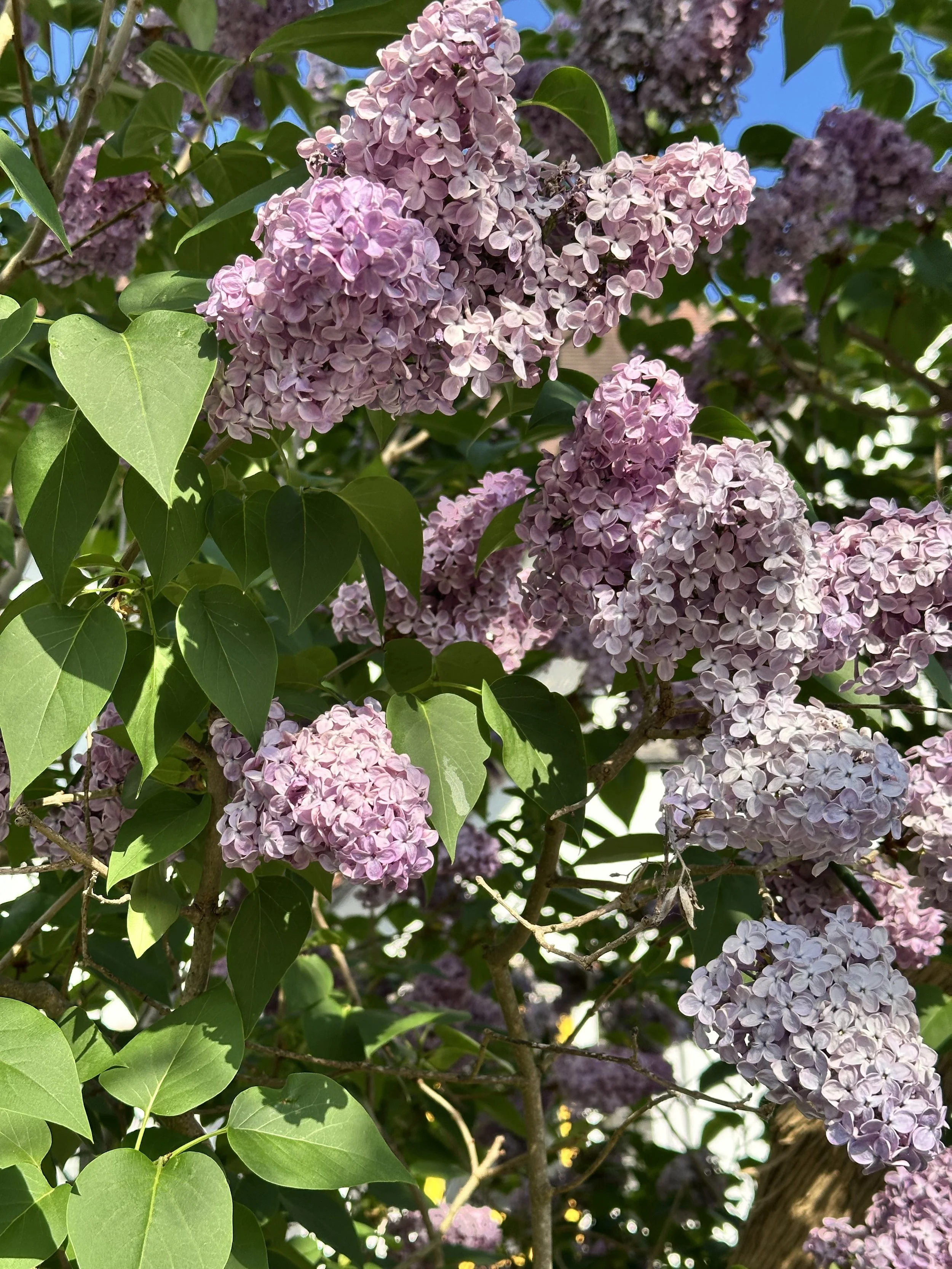
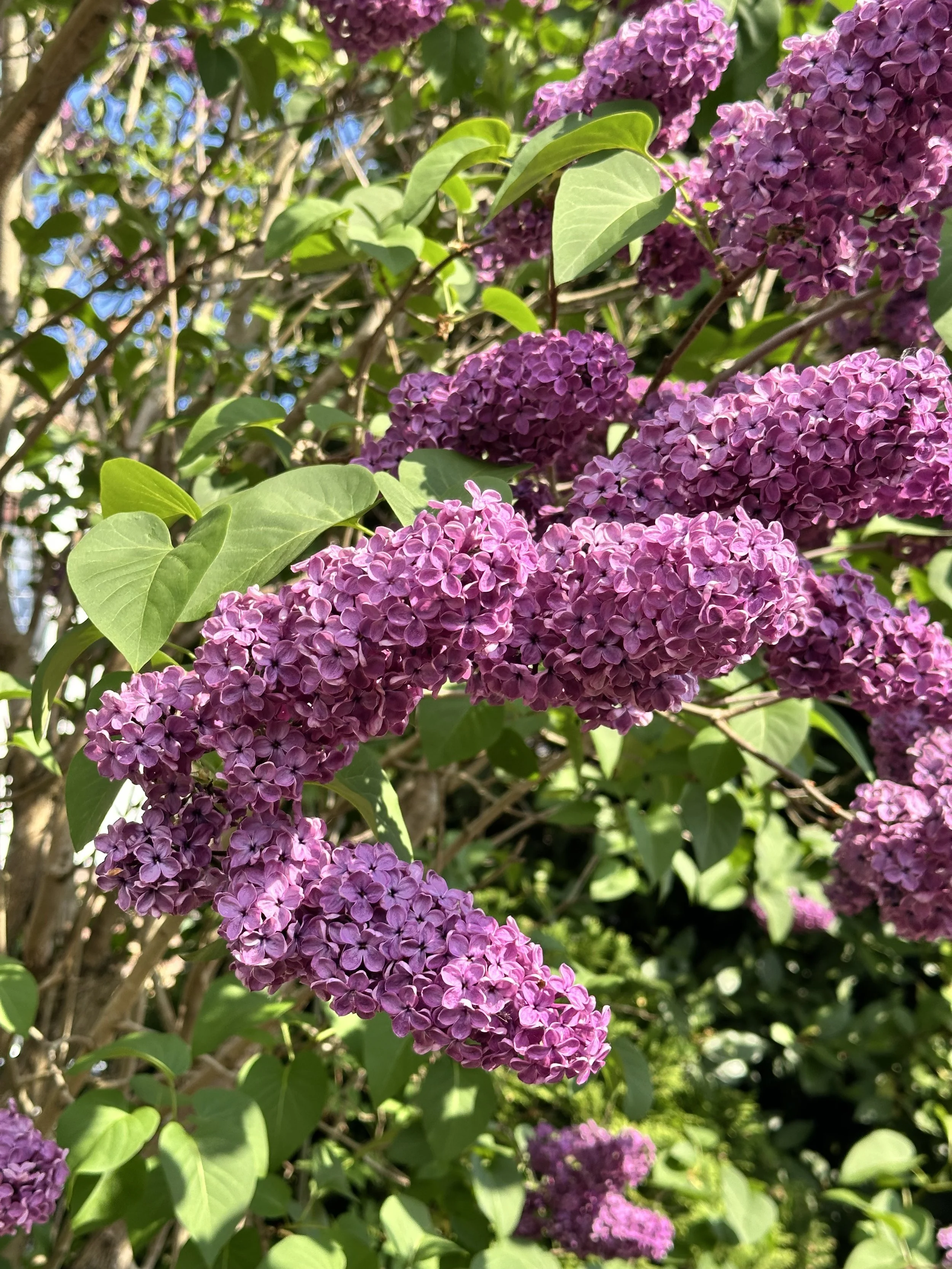
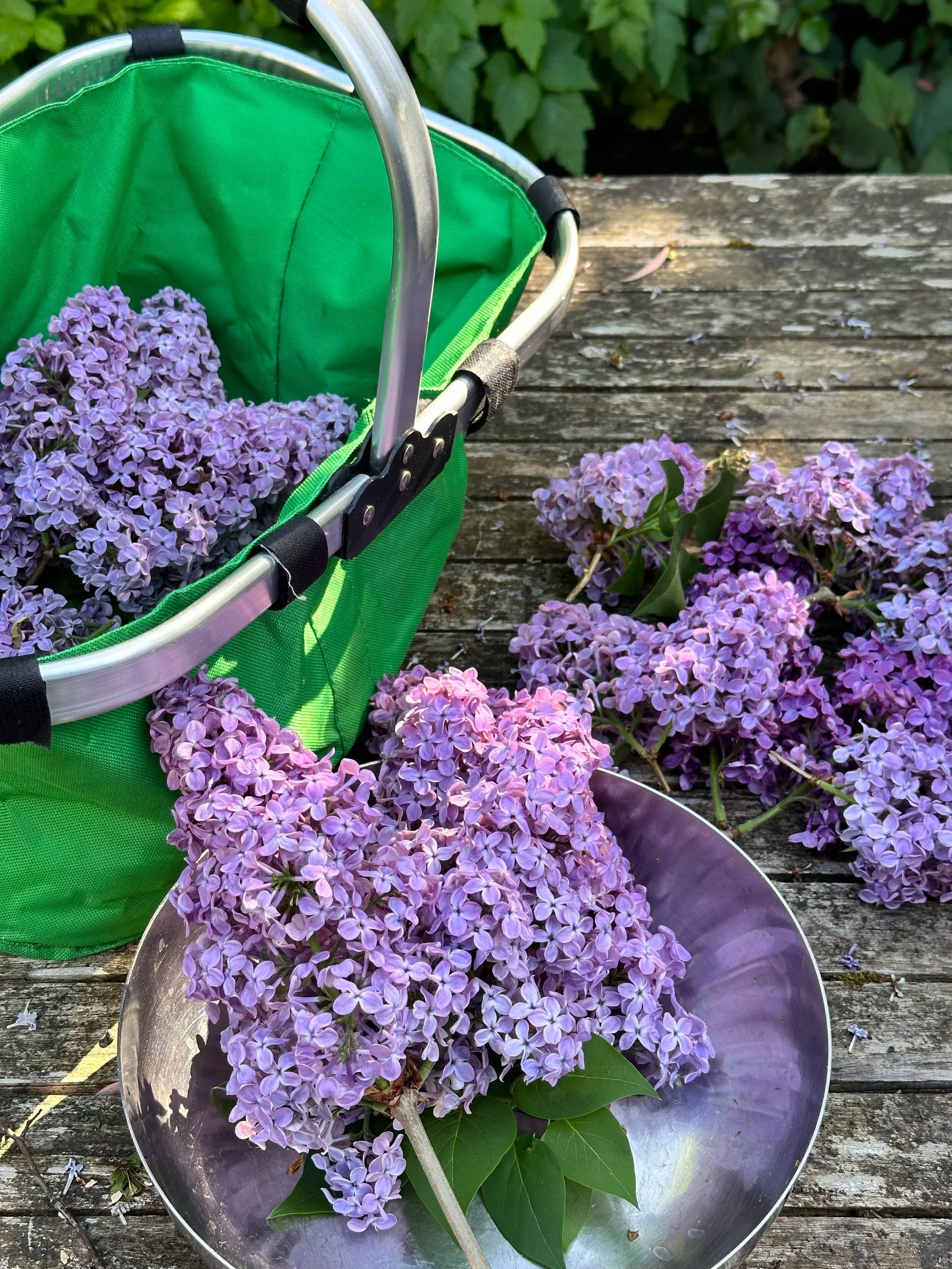
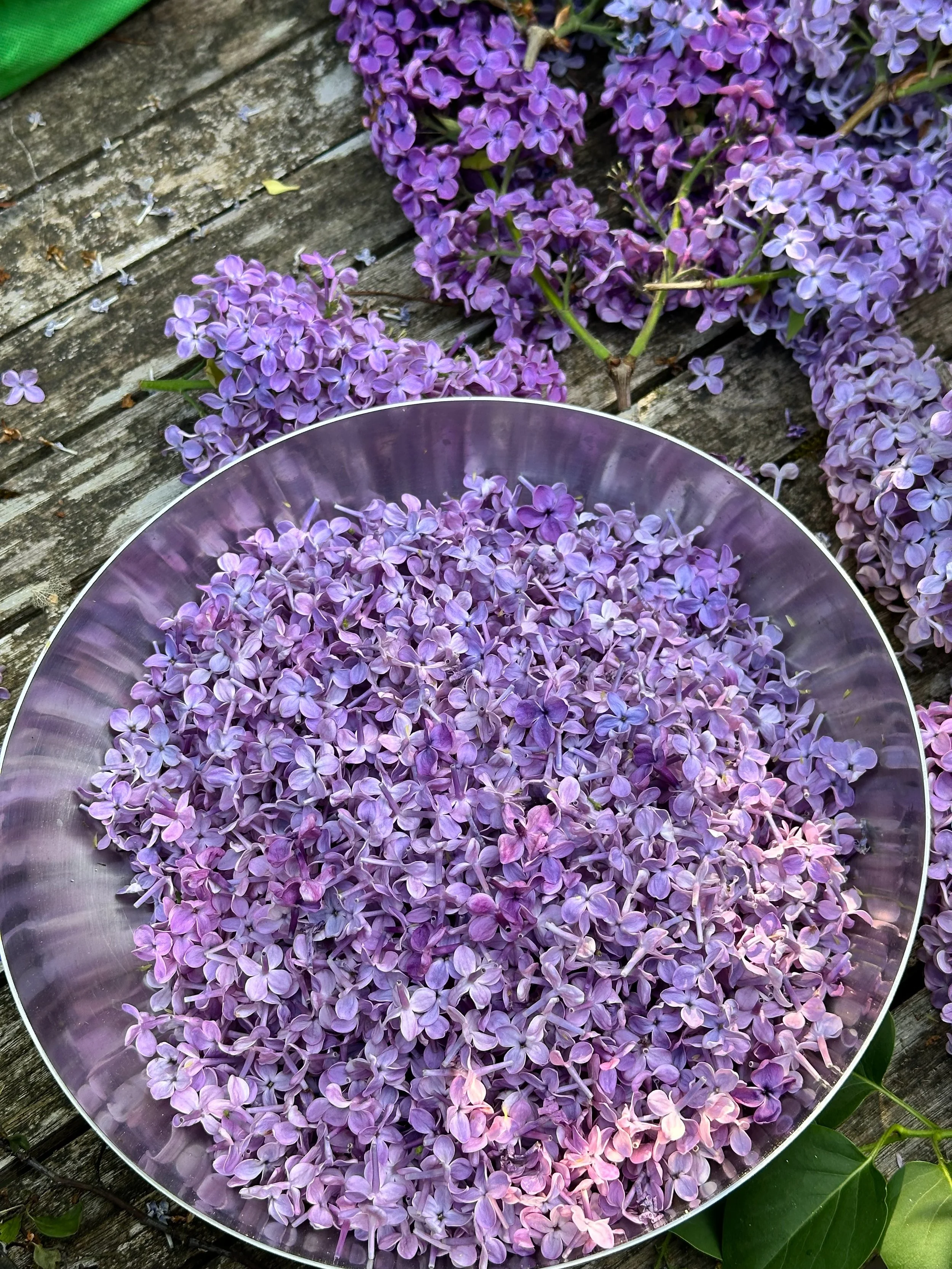
All foraged edibles start with gathering, so the first harvest was from my mum’s garden with the beautiful pale lilacs, but I actually needed to enlist the support of several neighbors’ lilacs too, as ours was an early bloomer. As long as you are picking common lilac, Syringa vulgaris you can use any color. Since I wanted to make this tart with as many different lilac raw materials as possible, it was an action-packed few weeks that started with the infused honey. If you make nothing else from this long list of possible lilac projects, this is the one I recommend. The initial steps are the same for any lilac conconcoction:
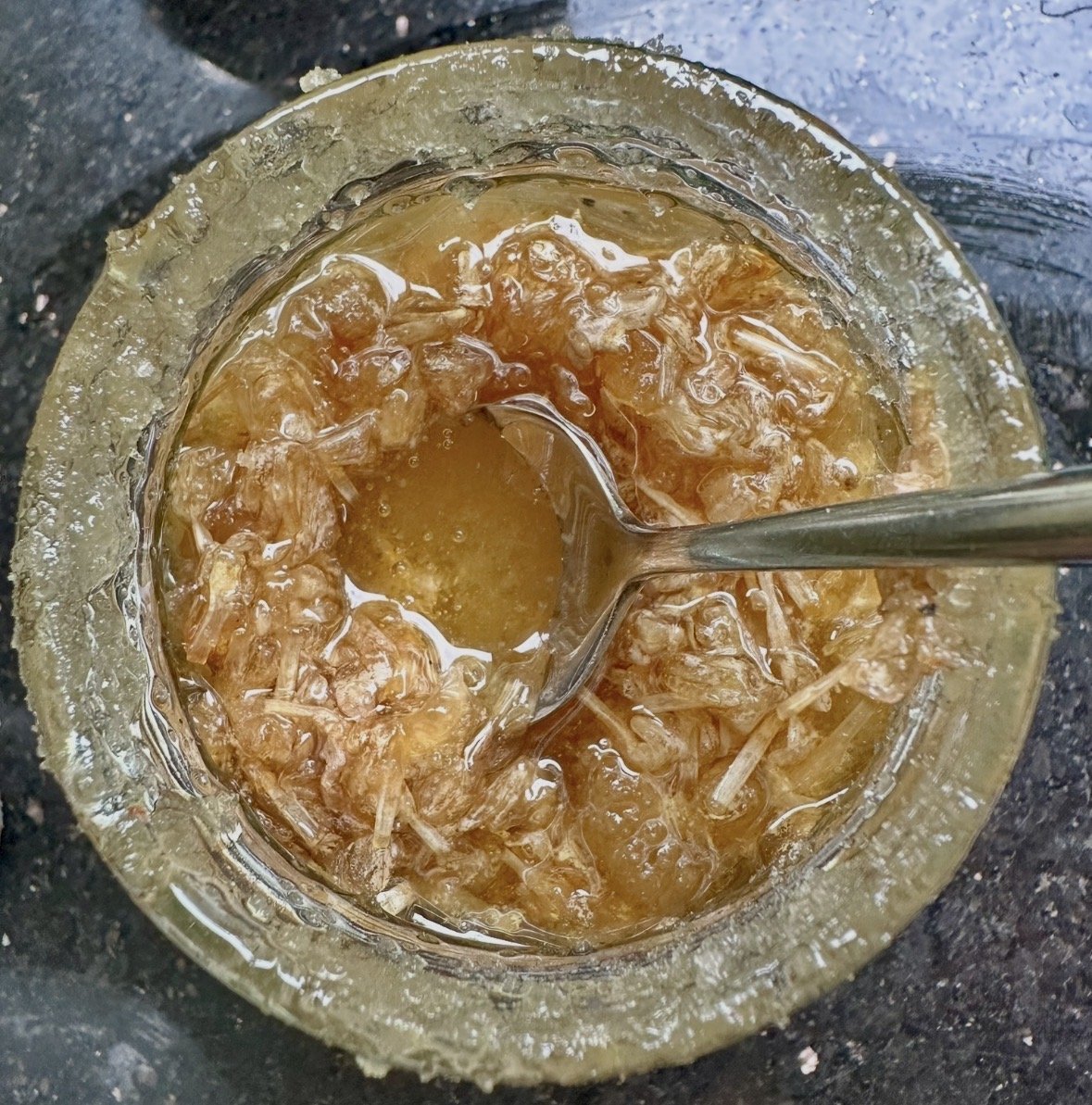
Lilac Infused Honey
- Harvest the flowers.
- Allow the critters to run away.
- Separate the flowers from the green stem and leaves which taste bitter.
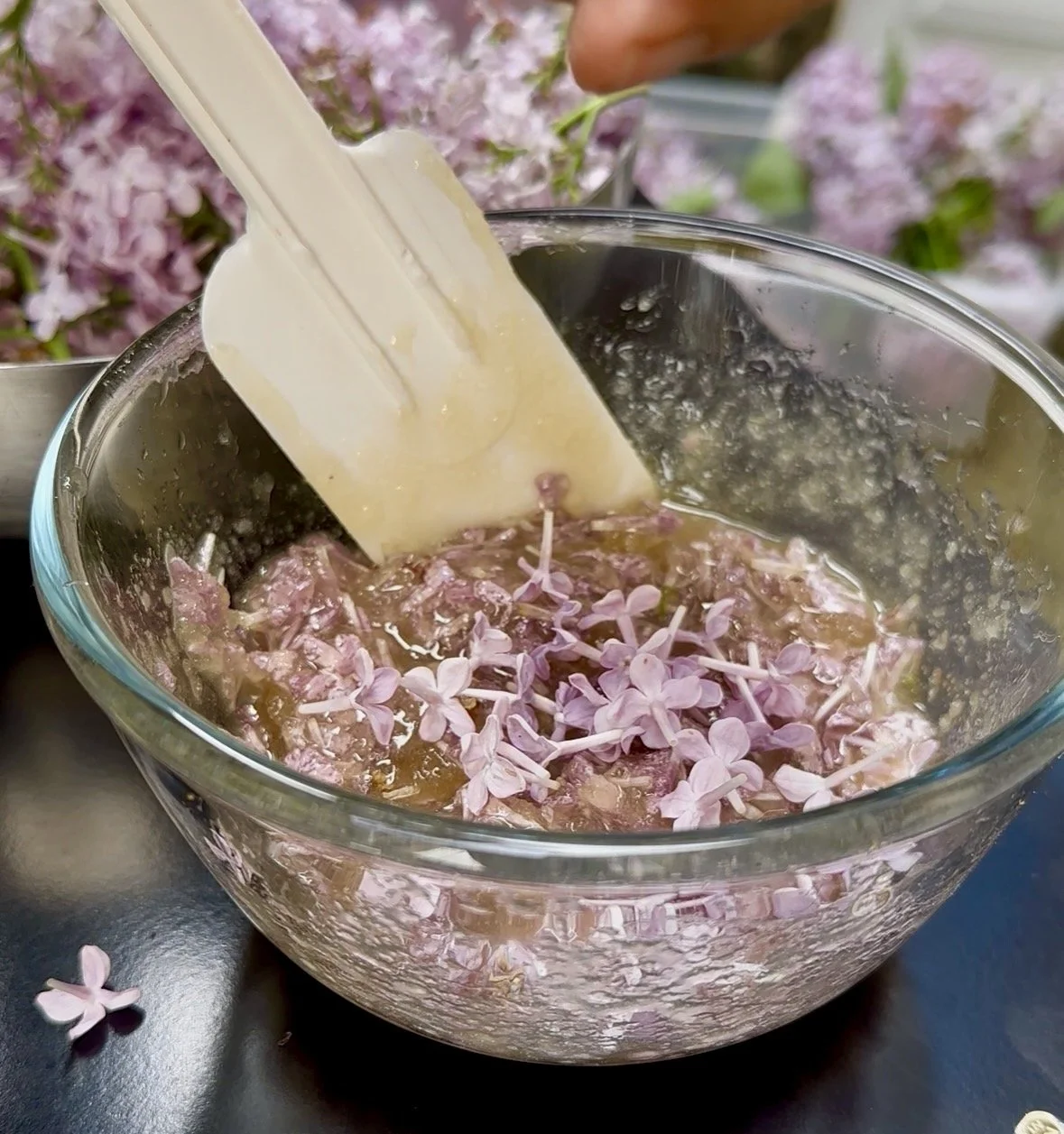
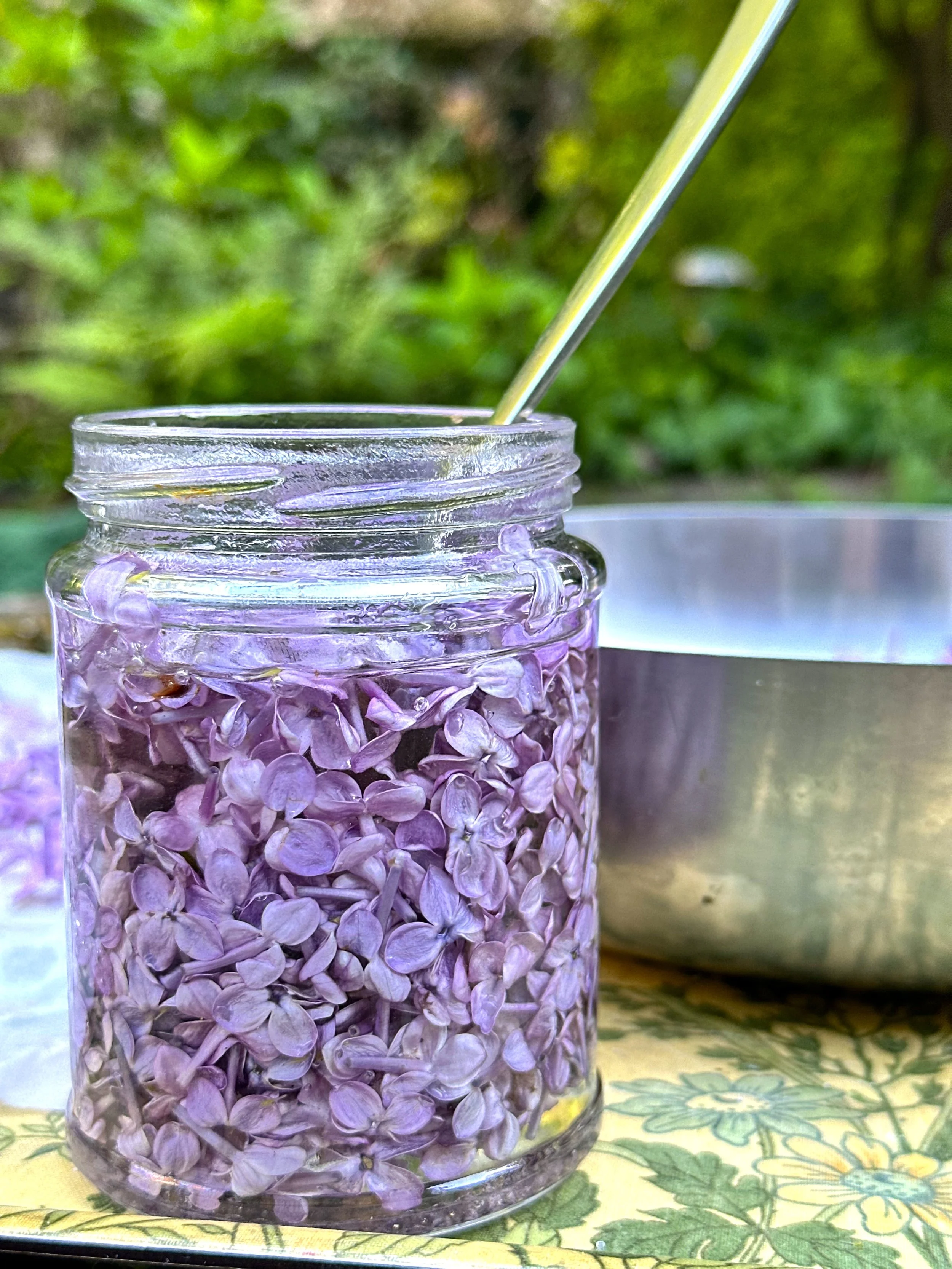
- Mix 1 part flowers to 2 parts raw honey*. (No need to wash the flowers)
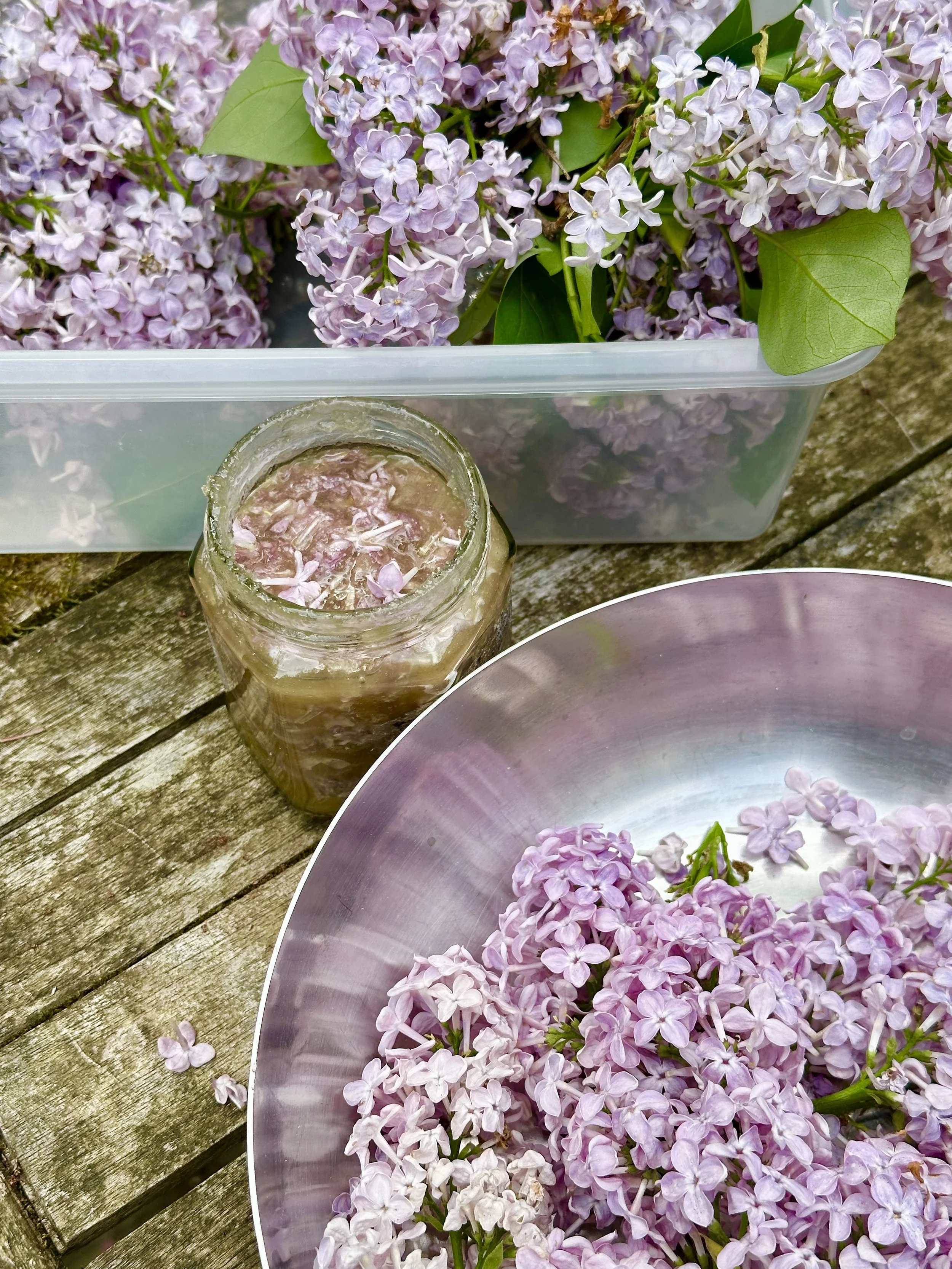
- Add everything to a glass jar
*Raw honey is honey that hasn’t been heated above 105 degrees and therefore has all of its natural nutritive benefits.
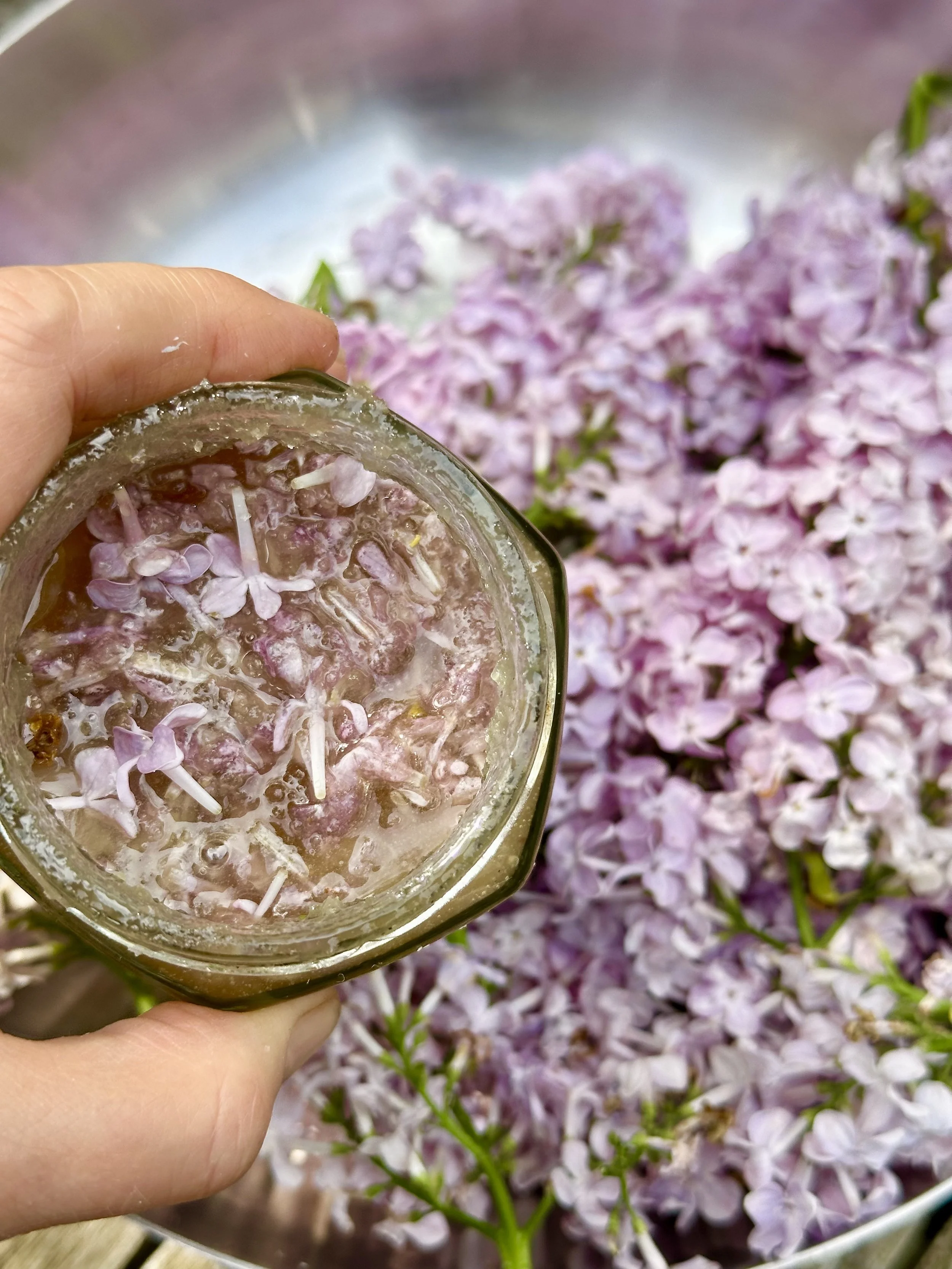
I used an especially thick local honey for this, so it was quite a challenge to submerge the flowers. I opted to pre-stir the mixture in a bowl before adding it to a jar. The key to this simple maceration is to ensure that the petals are below the level of the honey. This will prevent any mold or deterioration.
Cap the jar and turn it once or twice a day for the first few days and then the flowers will naturally fall beneath the honey syrup that is starting to form.
Once the honey tastes and smells like marzipan, it’s ready to use. You can strain out the petals or use the honey and petals together.
Feel free to pause the lilac shenanigans here. I won’t judge, or if you want to see what happened next… Keep going, but don’t be surprised if you dream about lilacs tonight!
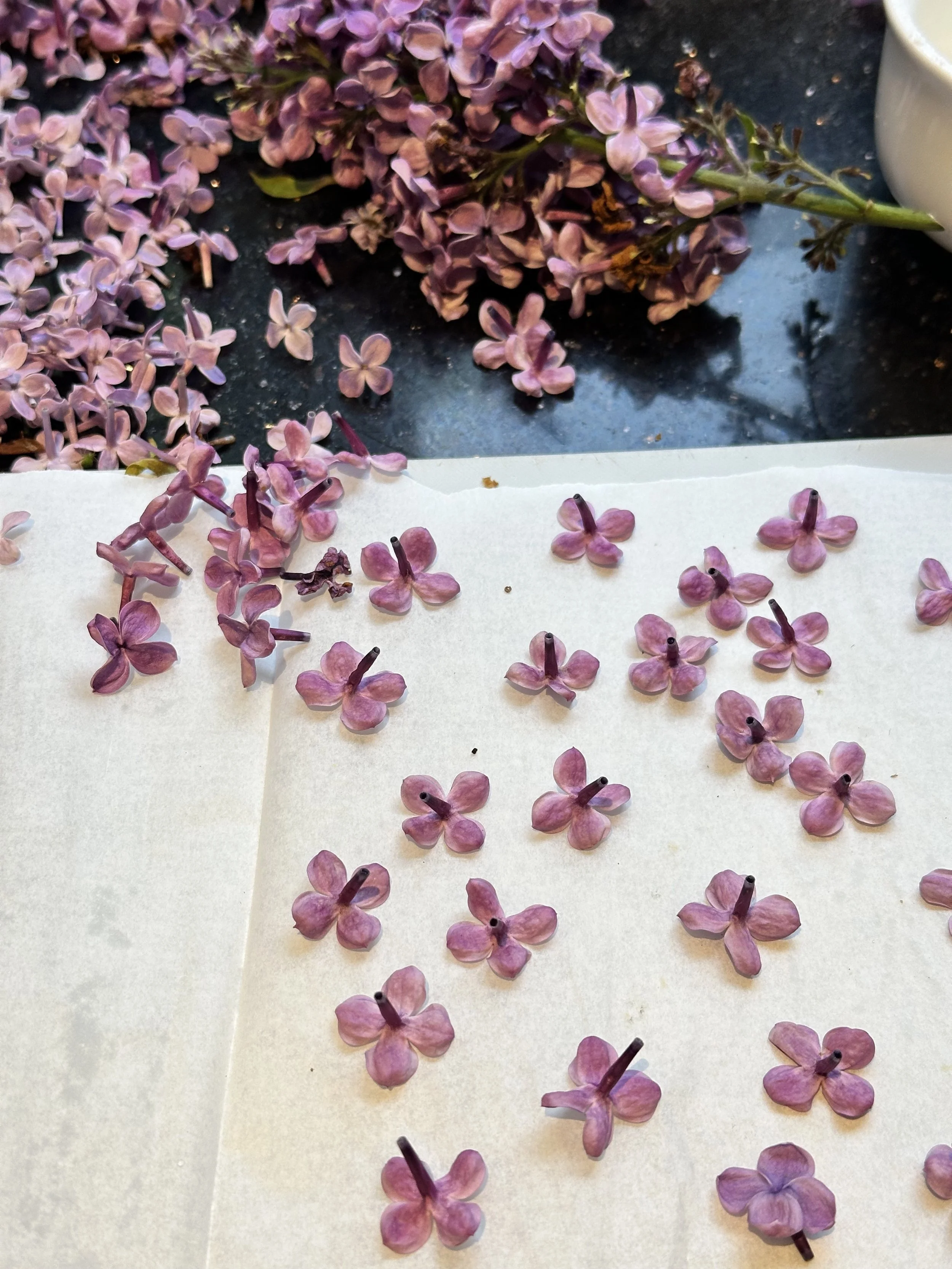
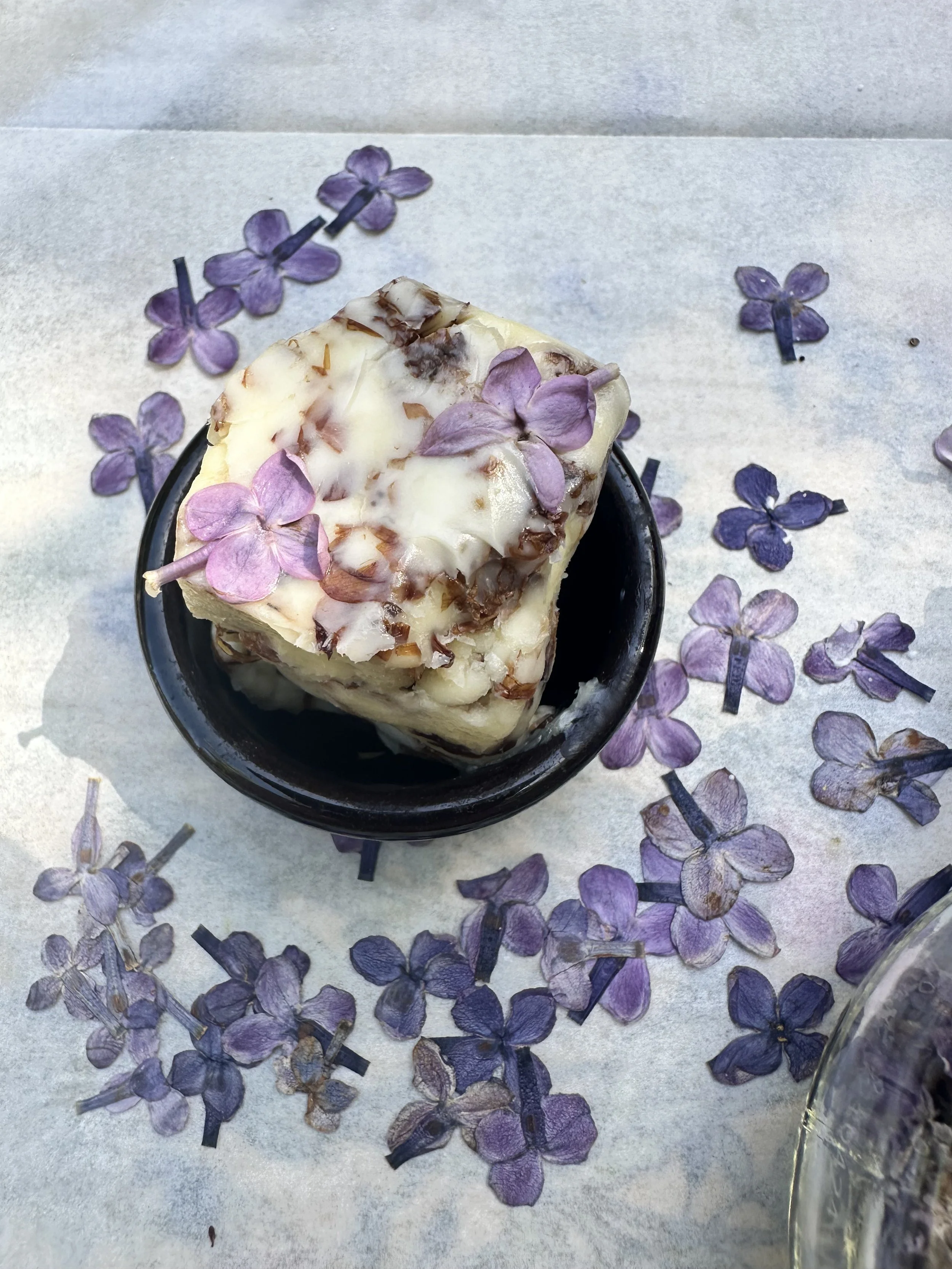
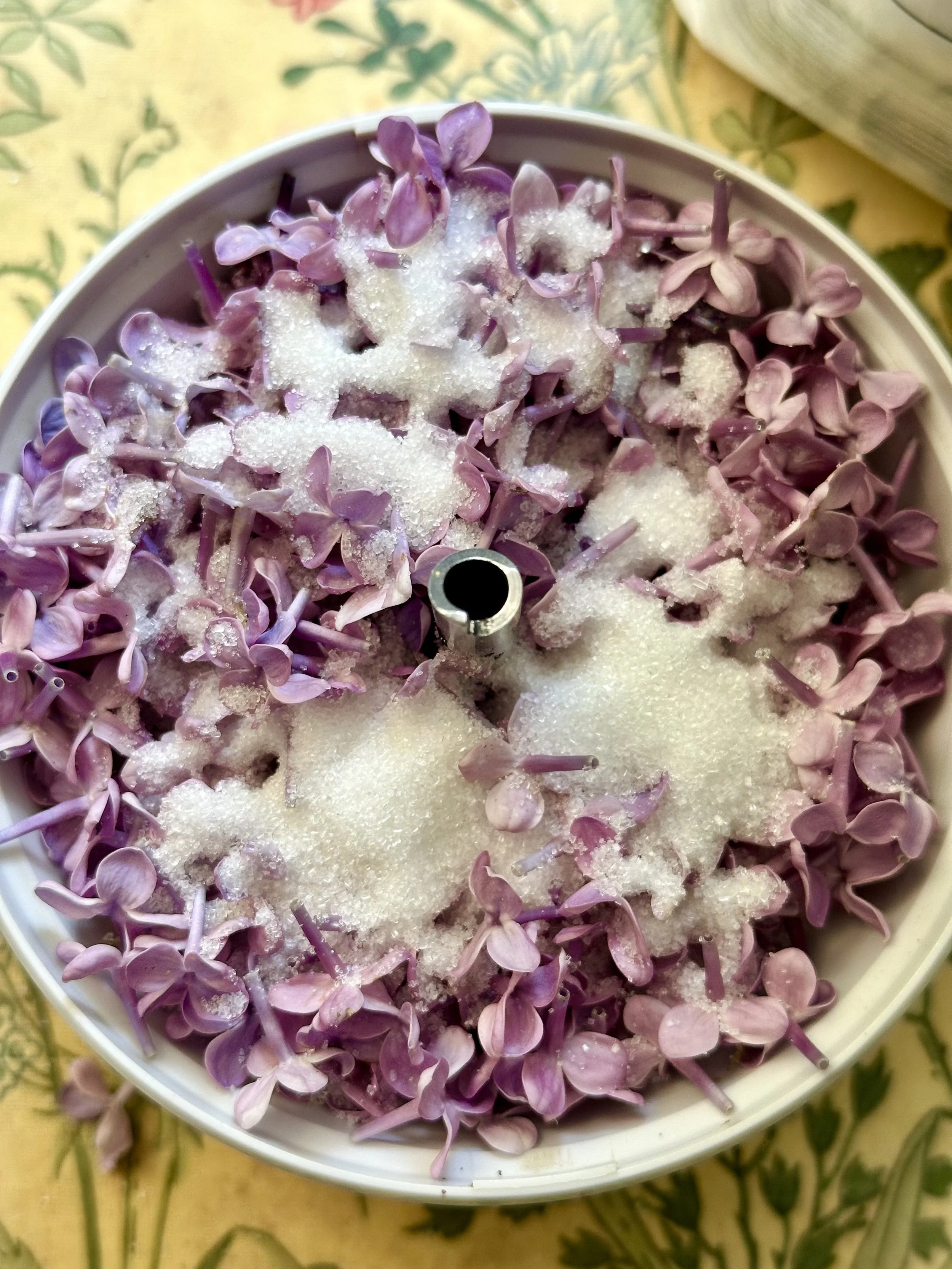
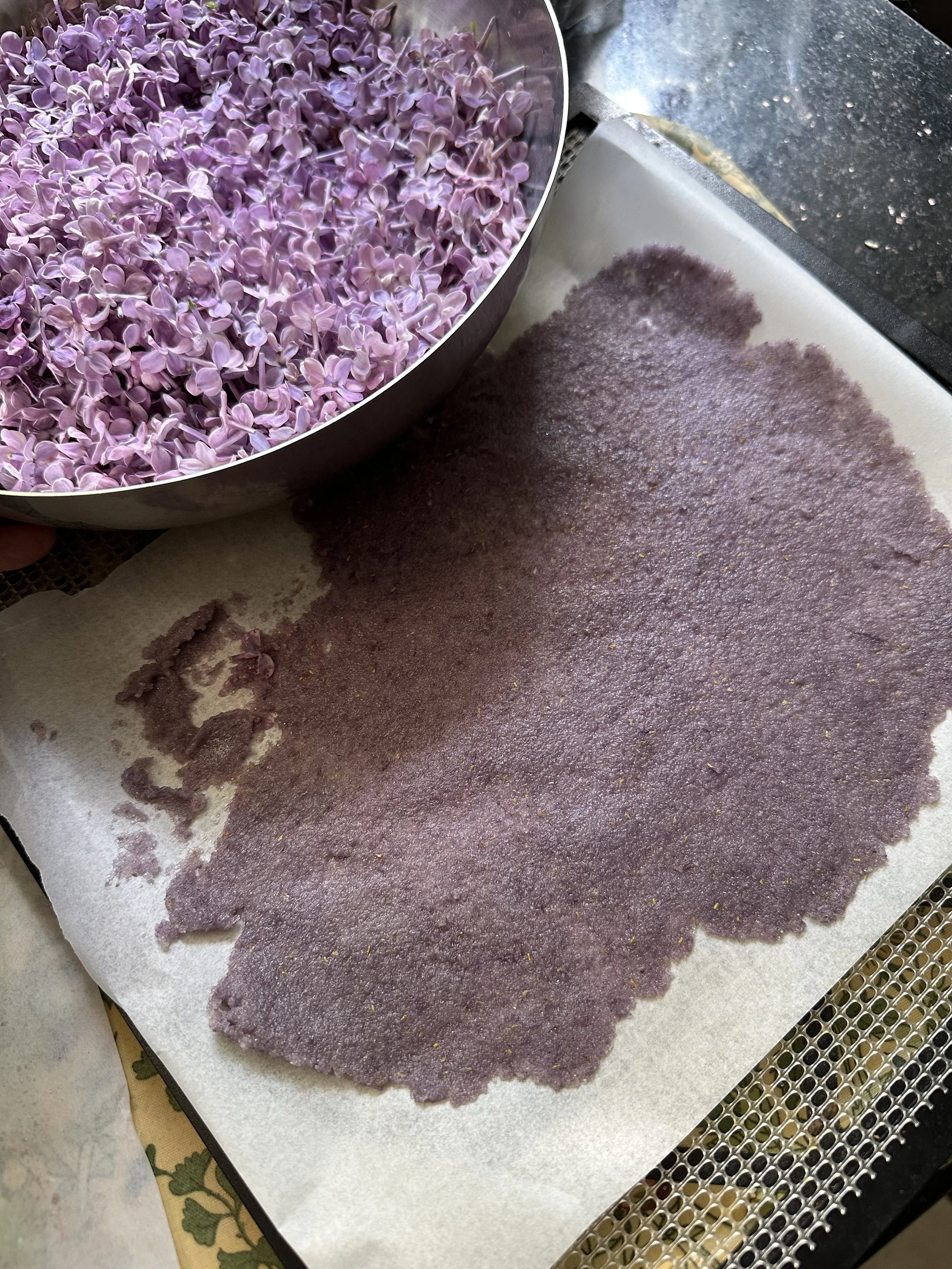
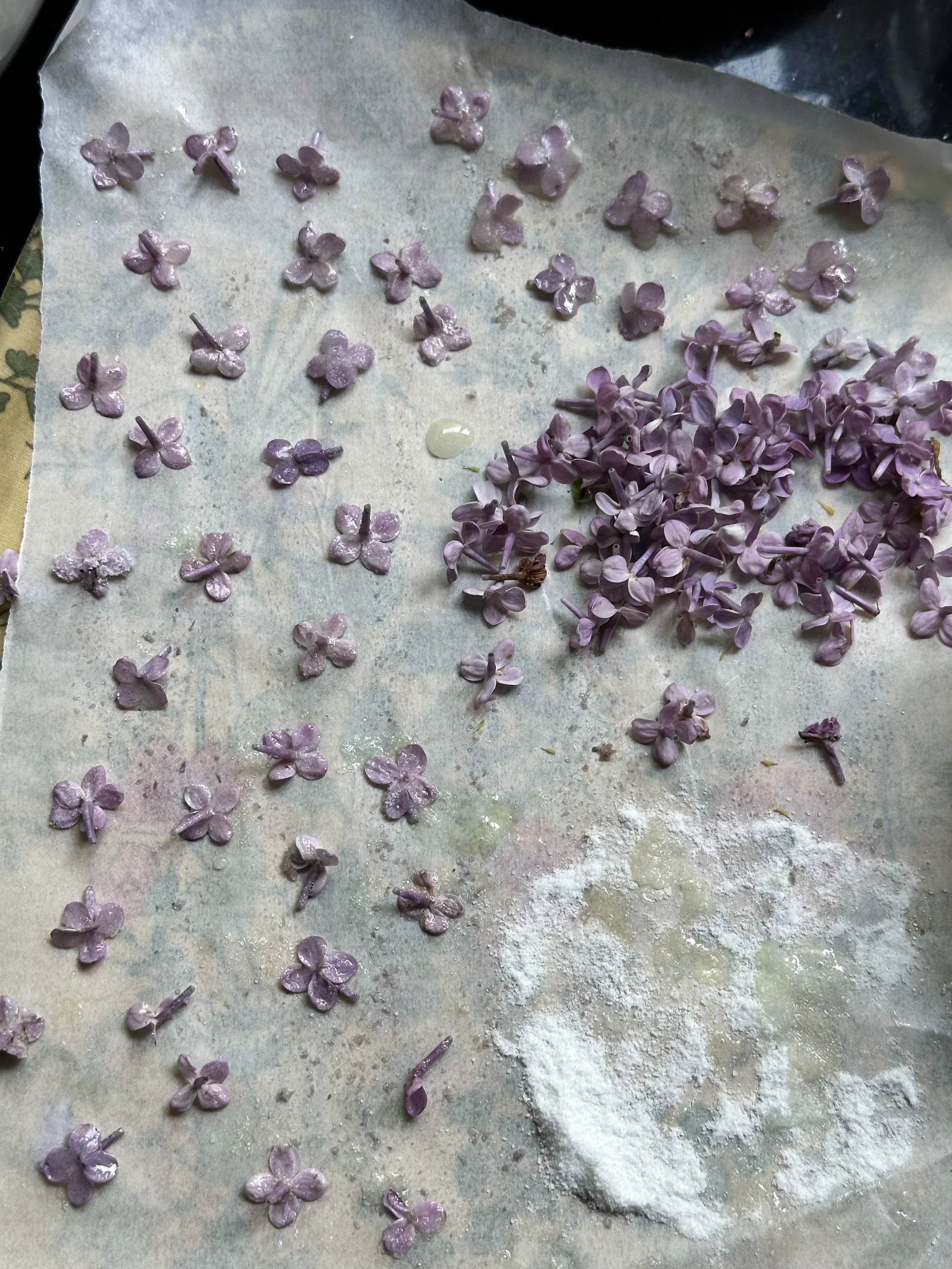
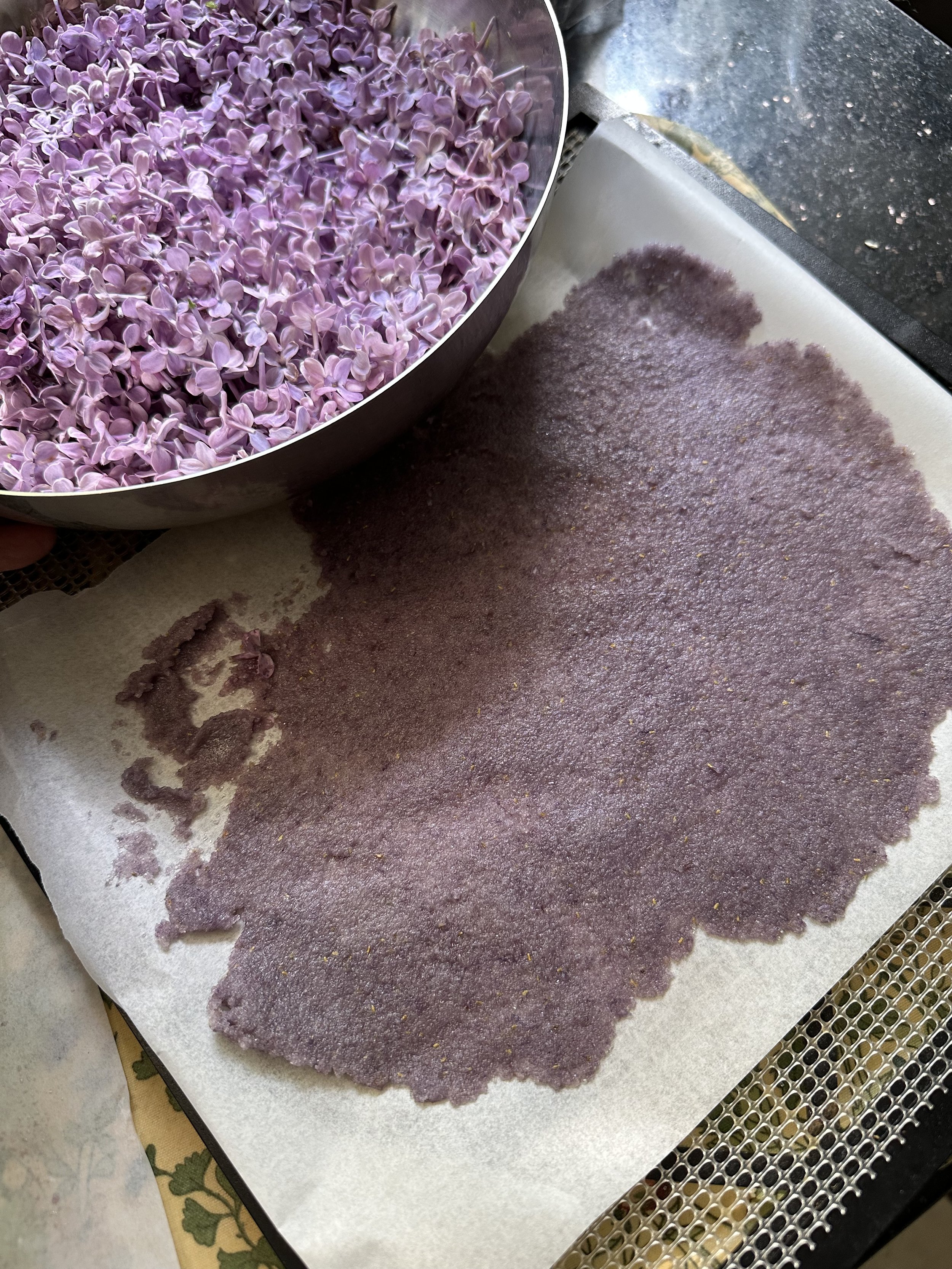
While all the photos show the most gorgeous array of pastel lilac and pinks, it’s worth noting that the color fades in most of these preparations unless you adjust the pH with a squeeze of lemon. However, doing so also masks the subtlety of the lilac flavor, which was my priority, so I only added lemon to the lilac tea I made while preparing the tarts.
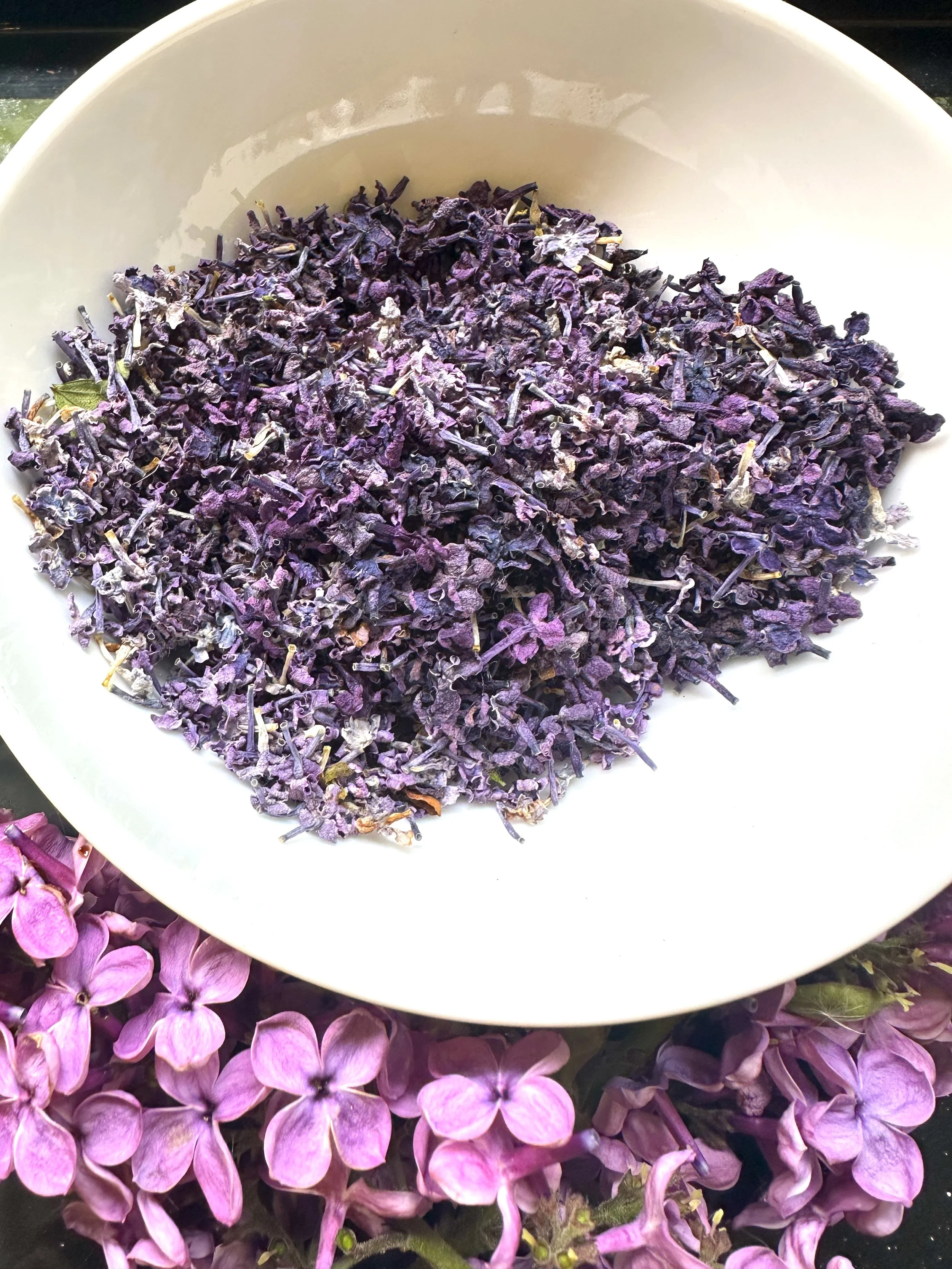
Now we’ve explored all the preparation that’s involved it’s time to assemble the tart. Here we go!
Lilac Frangipane/Bakewell Tart
Makes 4 Individual Tartlets
Gluten Free Pastry
16g rice flour
22g cassava
12g tapioca starch
17g almond flour
pinch salt
1/2 tsp flax
1/2 tsp psyllium husk
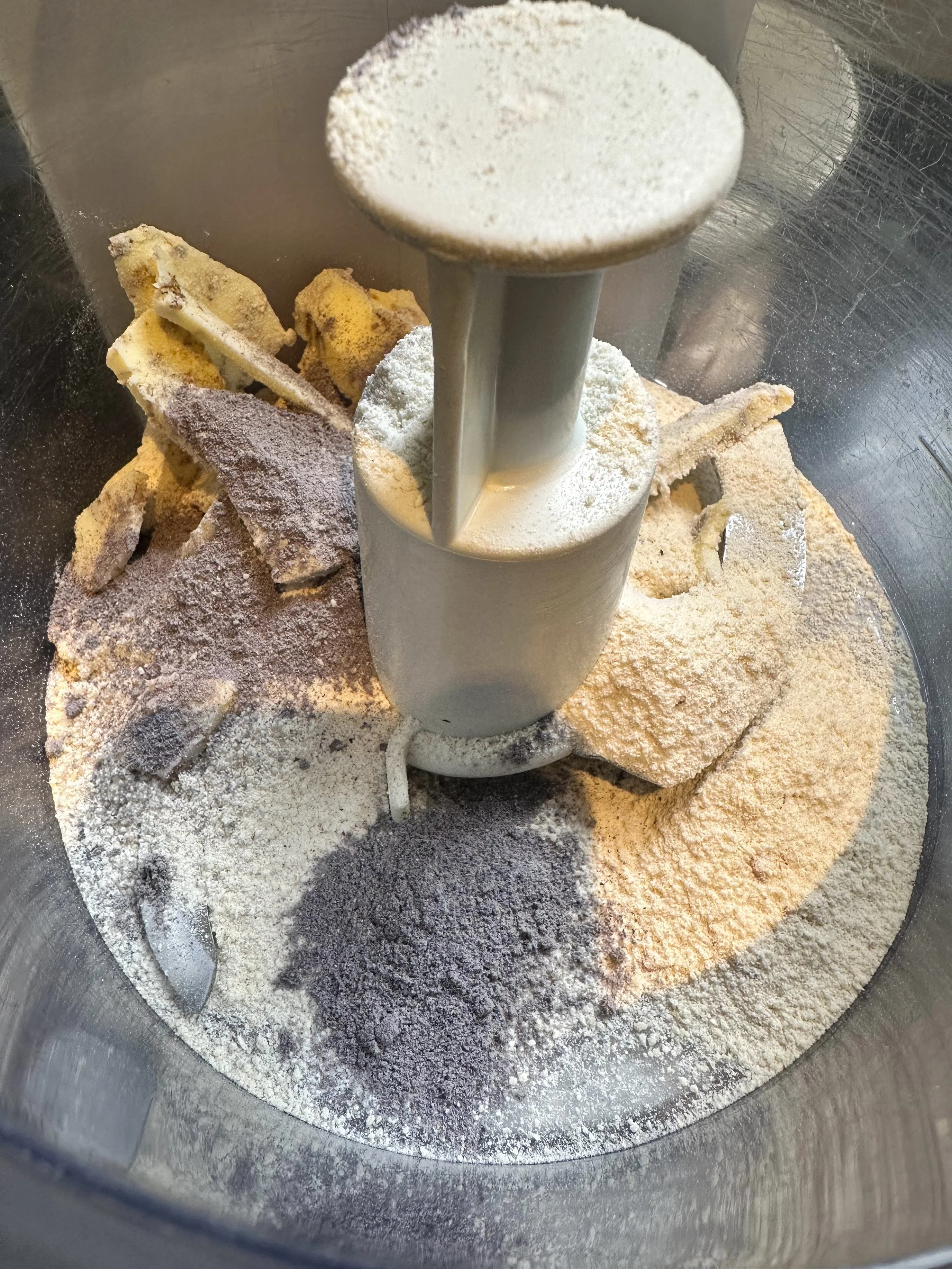
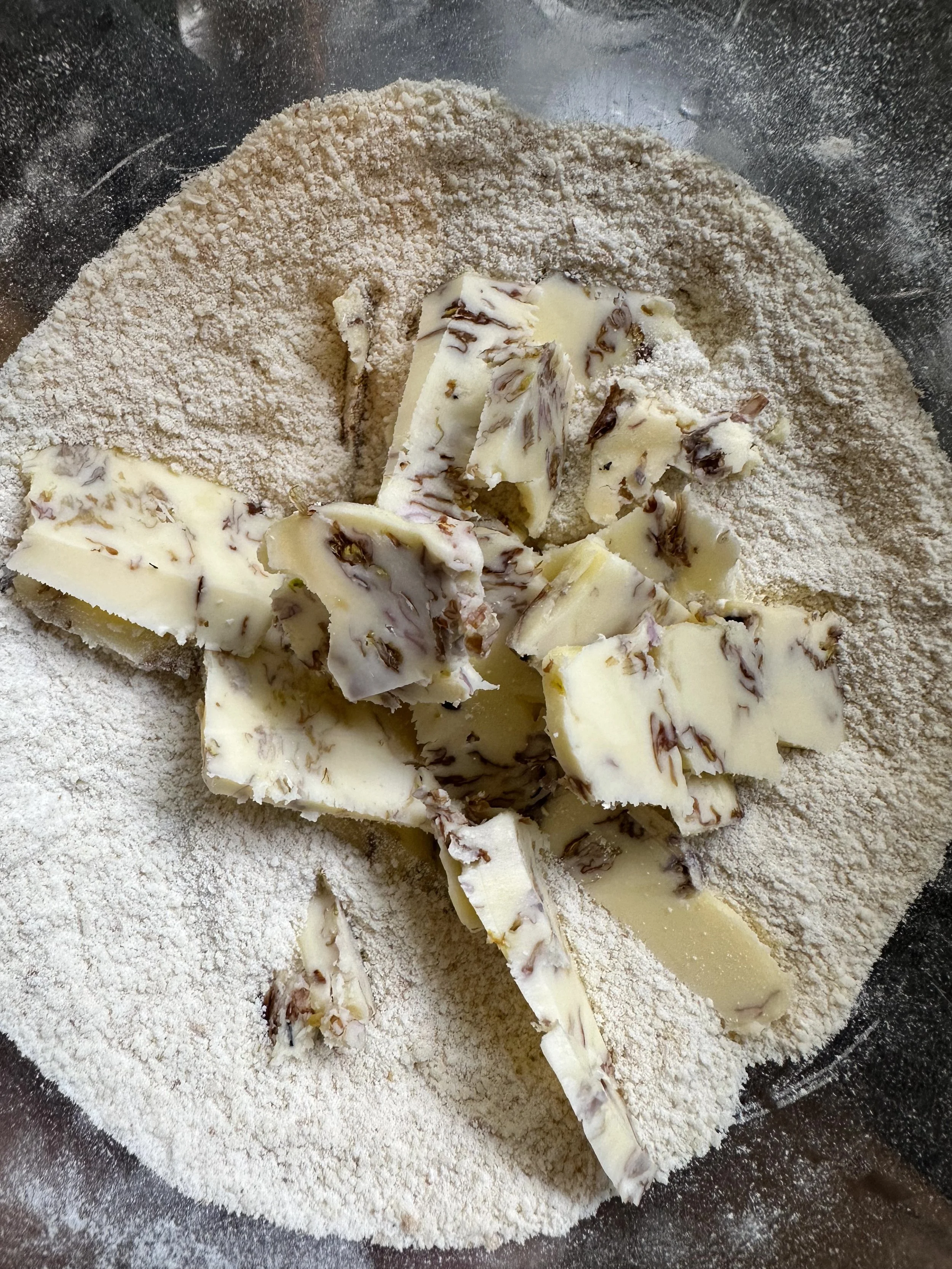
32g cold lilac compound butter**, (**Fresh lilacs blended into softened butter), or 25g cold butter
2 tbl of beaten egg
1 1/2 tbl lilac infusion, (A handful of flowers added to a mug and covered with boiling water and steeped for 30 minutes) or use filtered water
1 tsp of powdered dried lilac petals (Optional)
Raspberry jam is a great alternative to making the following compote!
Compote
½ cup of blueberries
1 teaspoon lilac simple syrup, (optional as it is already pretty sweet) + plus a few spoonfuls of lilac infusiion so that the fruit doesn’t burn while cooking.
Frangipane filling
60g lilac compound butter, or 50g softened butter
36g lilac infused castor sugar, or 34g castor sugar
50g ground almonds
1 tablespoon of cassava flour
1/2 a beaten egg
1/2 an egg yoke
few drops of almond extract
A few flaked almonds for decoration
Water Icing
Powdered sugar
Water
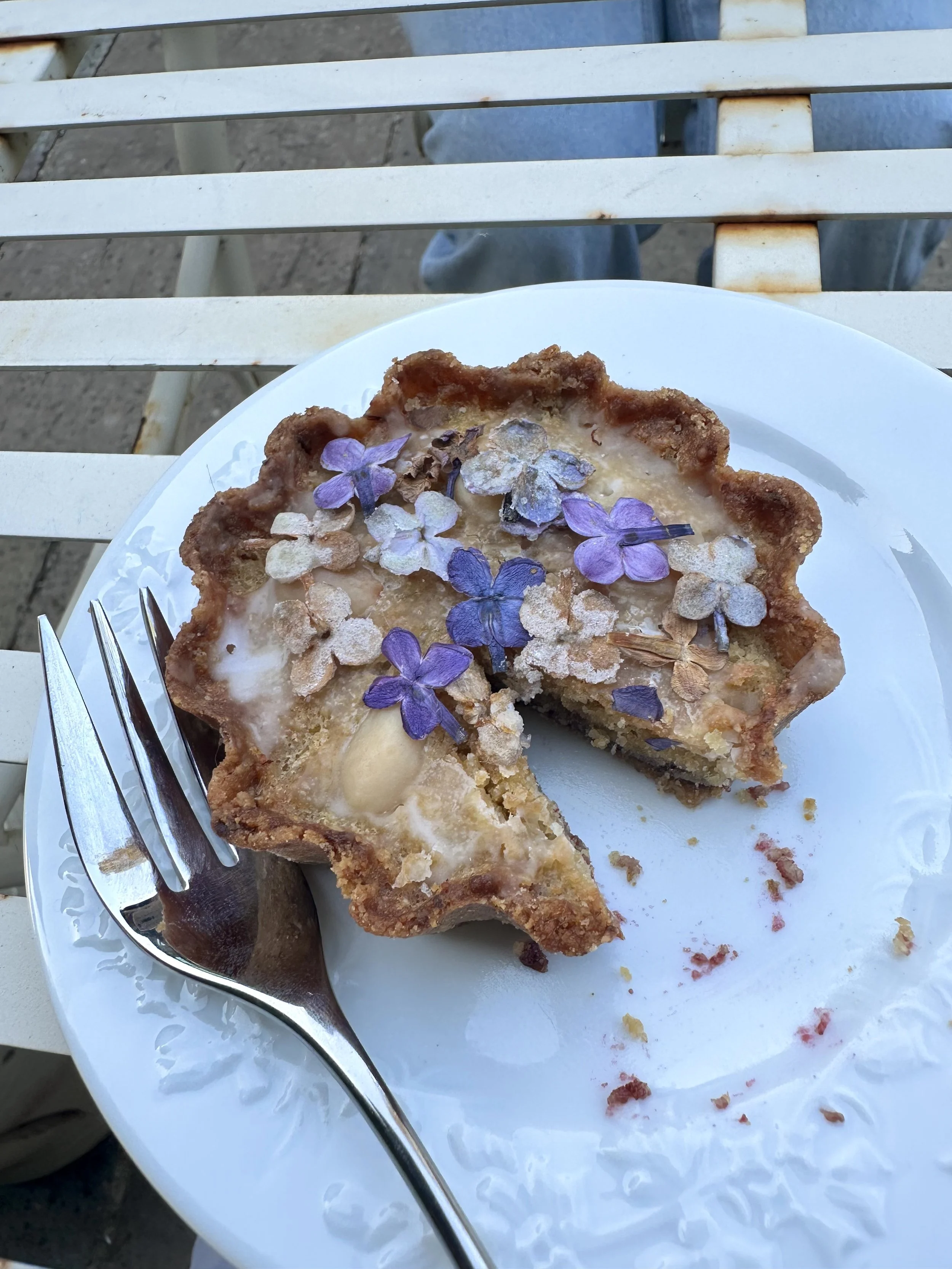
Decoration applied just before serving so the flower color stays vibrant
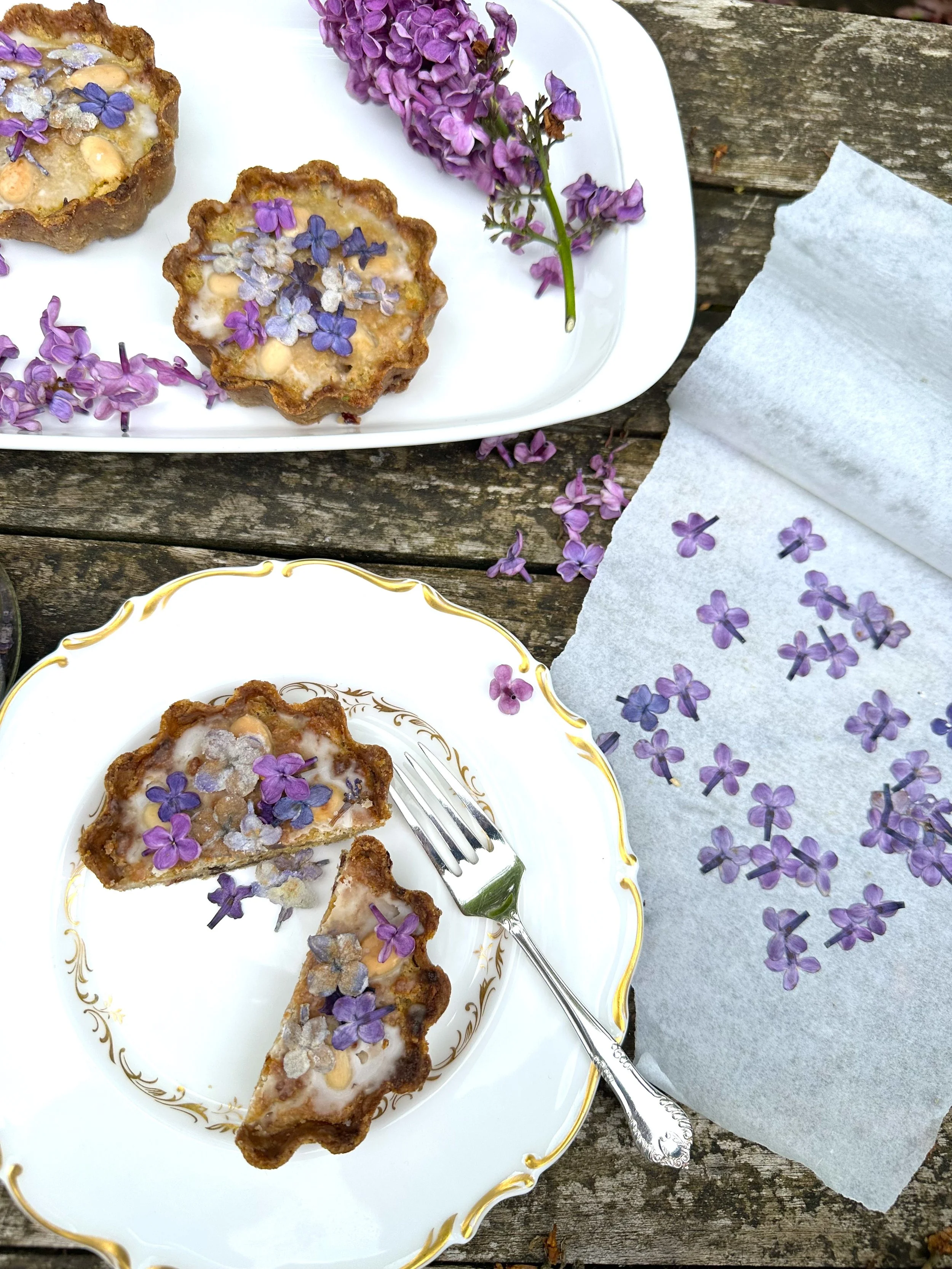
- Pressed Flowers (fresh flowers carefully pressed between parchment paper weighed down with a book until fully dried)
- Preserved + Sugared lilac flowers, (fresh lilac flowers gently painted with egg white with a few drops of water and dipped in white sugar, and allowed to fully dry)
- Fresh flower petals if available
Method
- Lightly blend the cold compound butter into the pre-mixed flours, being mindful not to overbeat the mixture.
- Add the beaten egg and lilac infusion and turn into a dough. The dough may be a little sticky.
- Roll it out between two pieces of parchment paper to 3/16”or as thin as you can without it cracking and leave it to chill in the fridge for 20 minutes.
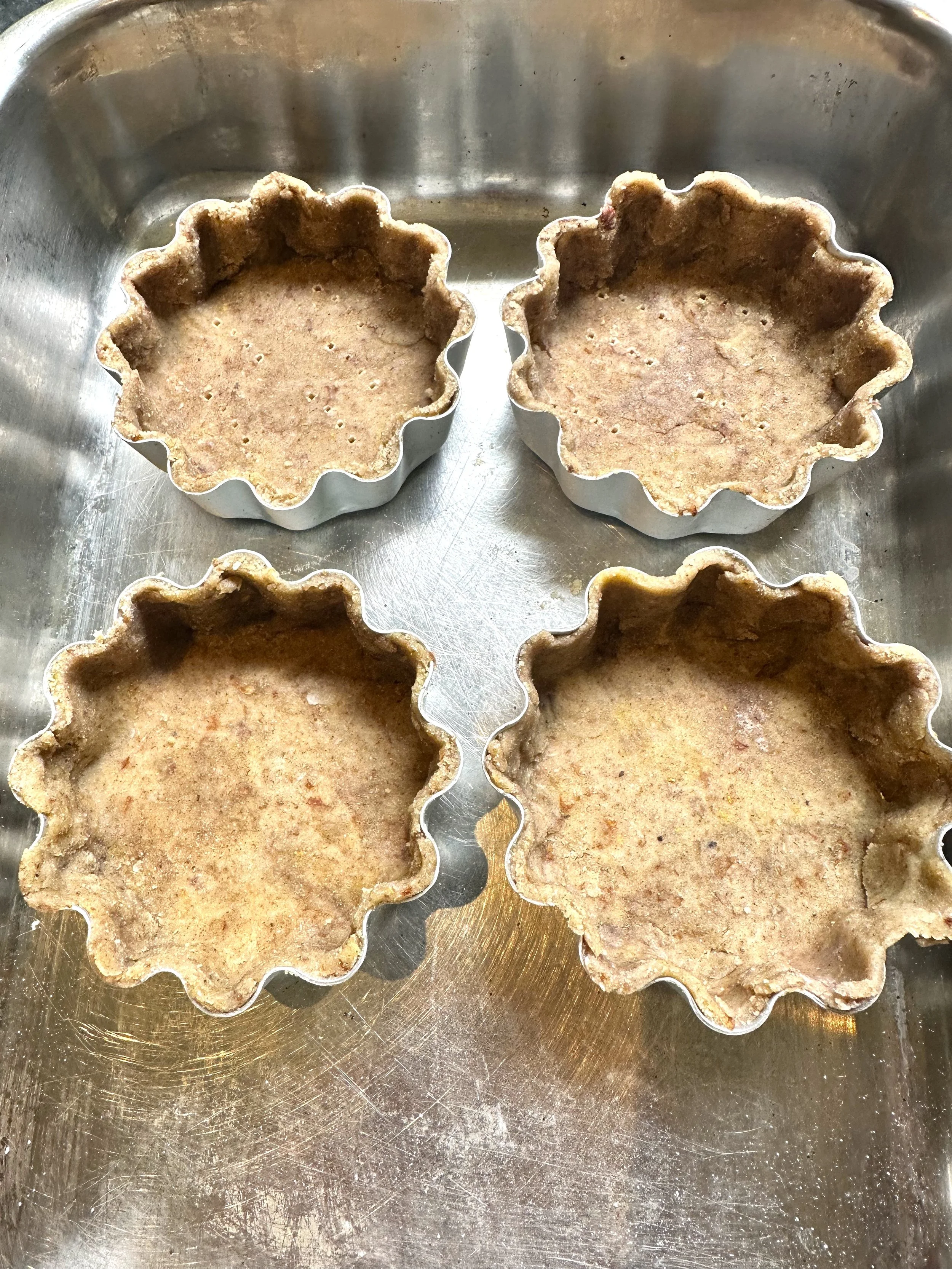
- Grease the inside of the removable tartlet pans with some butter and dust with a mix of sugar and the cassava flour, or for a less sweet experience, leave out the sugar.
- Line the dusted tins with the pastry and pop back into the fridge while you heat the oven to 180 degrees.
- Before popping the tart shells in the oven to bake blind, lightly fork the dough in a few places to prevent the pastry shrinking while baking and to release any moisture build up.
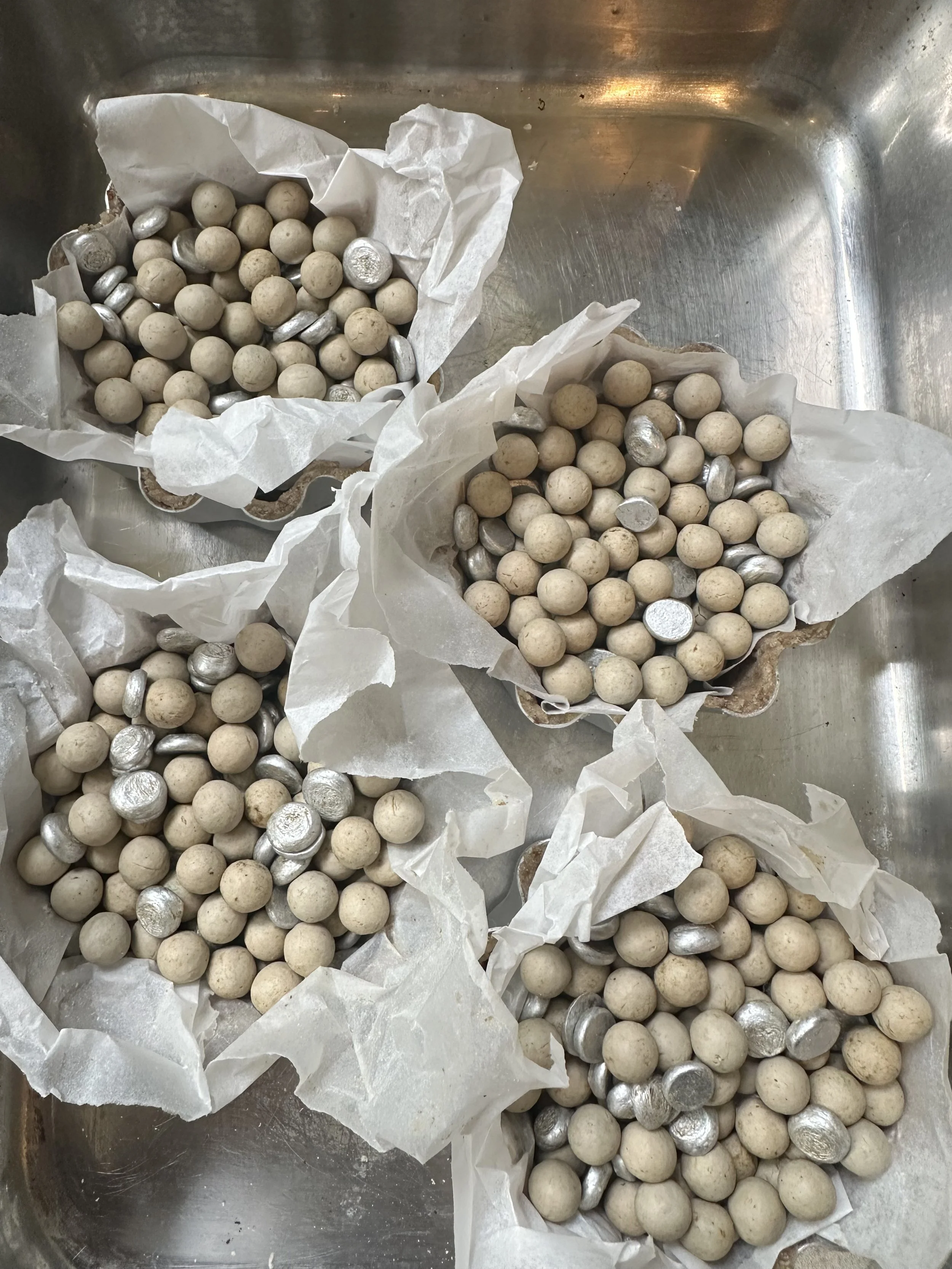
- Then, line the pans with crumpled parchment paper and pastry weights.
-Bake for 20 minutes. Remove the parchment paper and pastry weights and continue to bake until the pastry cases are lightly golden, (approximately 10 minutes).
- Remove them from the oven and allow to cool.
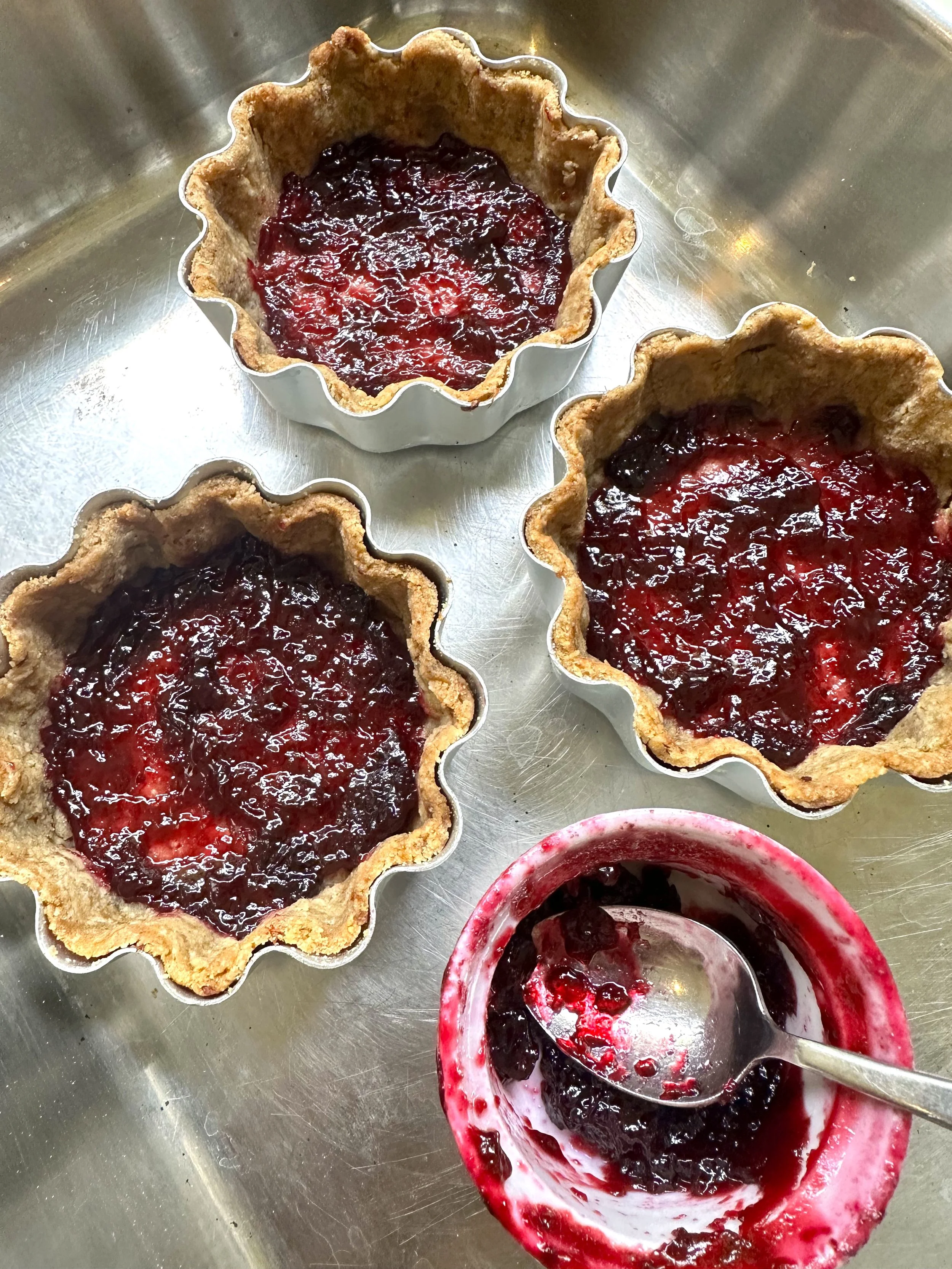
- Paint a thin layer of jam on the cooked tart shells. Alternatively, if you want to add another lilac touch, you can make the blueberry and lilac compote, which involves warming blueberries cooked down with a small amount of lilac simple syrup and lilac infusion to prevent the fruit from burning. Once the consistency is jam-like, push the jam through a strainer and allow it to cool before painting it on the pastry cases.
Next, it’s time to make the frangipane.
Note: If you are curious to know the step by step process of making the compound butter, and the lilac infused sugar or in fact any of the other ingredient details I may have skipped over, then the best place to see what they look like is on this short Petalune Herbals Instagram Reel .
- Lightly beat the softened compound lilac butter and then beat in the lilac infused sugar.
- Add the egg + egg yolk + almond extract and finally the ground almonds.
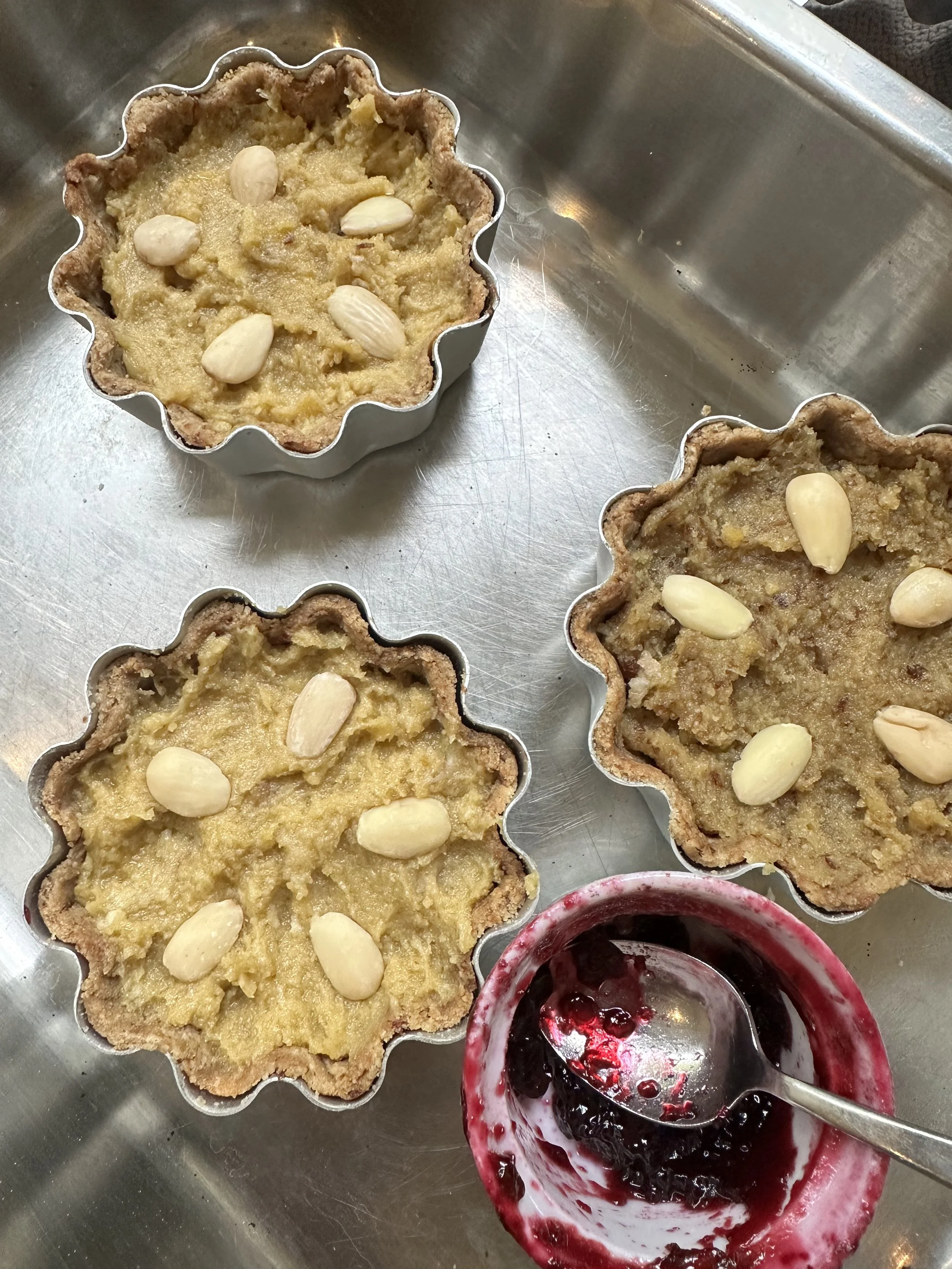
- Once fully mixed, spoon the paste on top of the compote in the pre-baked tart crust.
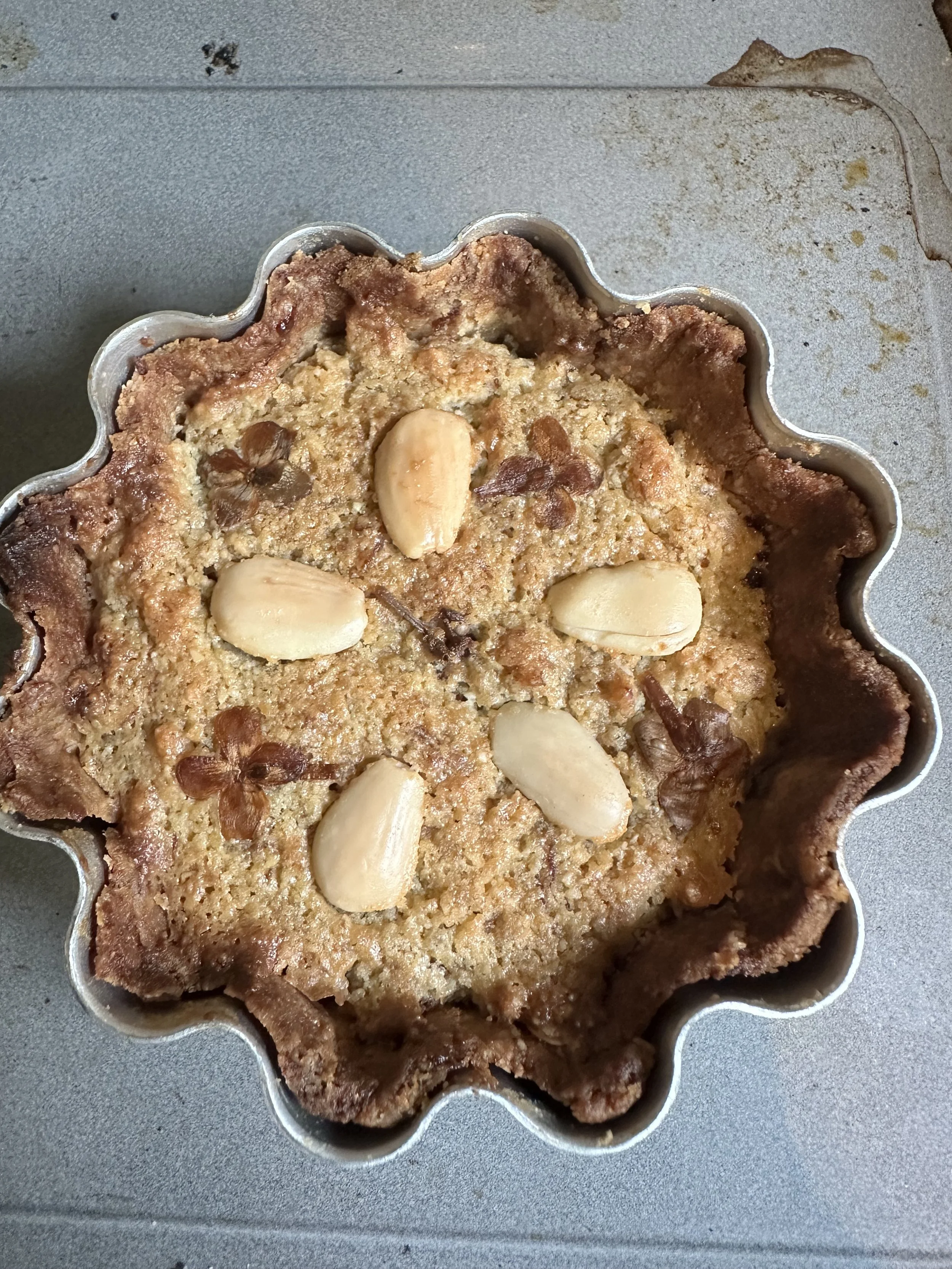
- Decorate with some flaked almonds. If you add pressed flowers at this stage they will lose their color so you can skip that part and save the decorative flowers for the end.
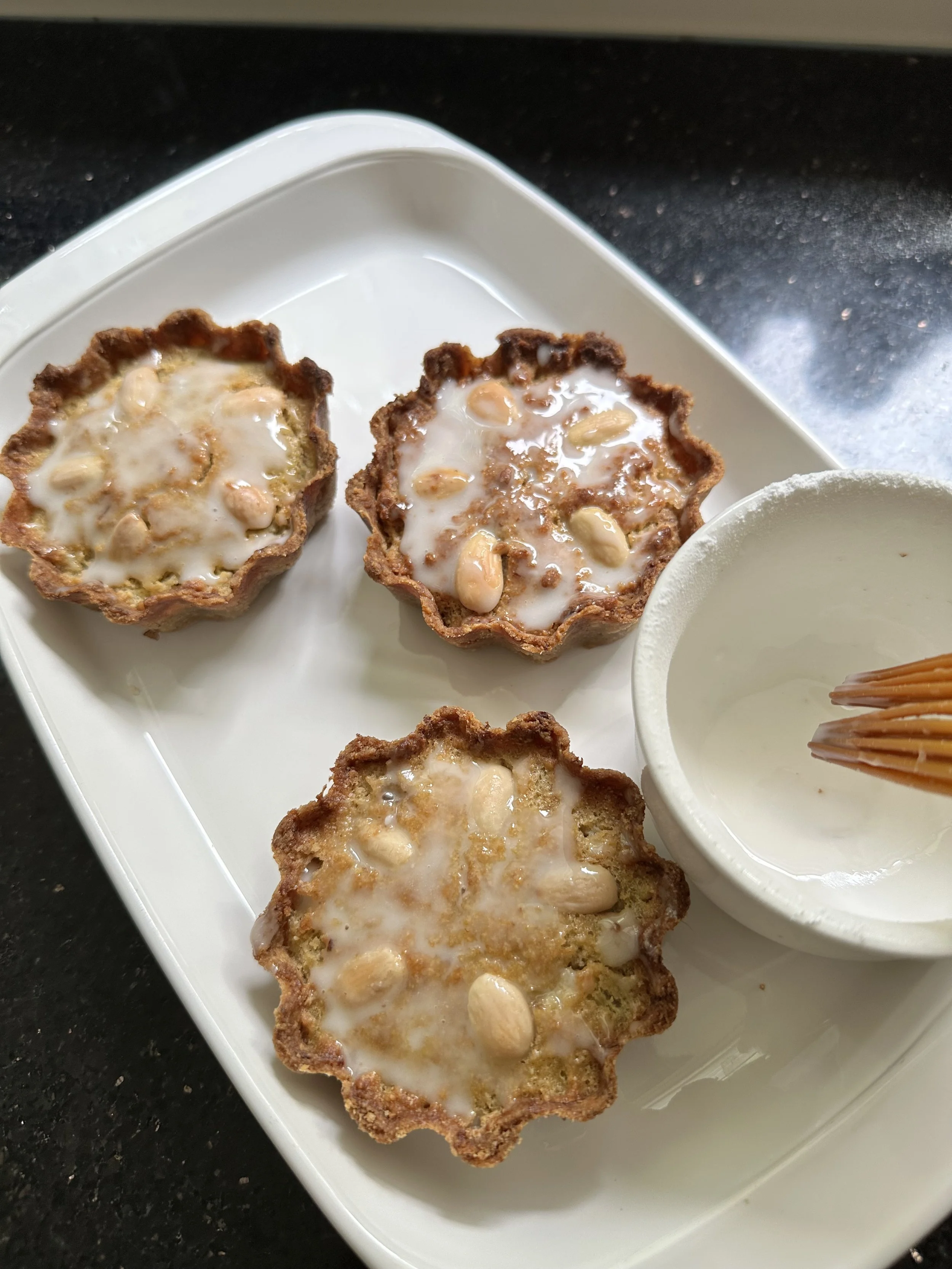
- The frangipane will take about 15 minutes to bake and then once it’s cooled, you are ready to make your water icing. I didn’t measure the powdered sugar, but if you use 2 tablespoons of sifted powdered sugar and blend it with 1/2-1 teaspoon of water, that should give you the correct consistency for the glaze.
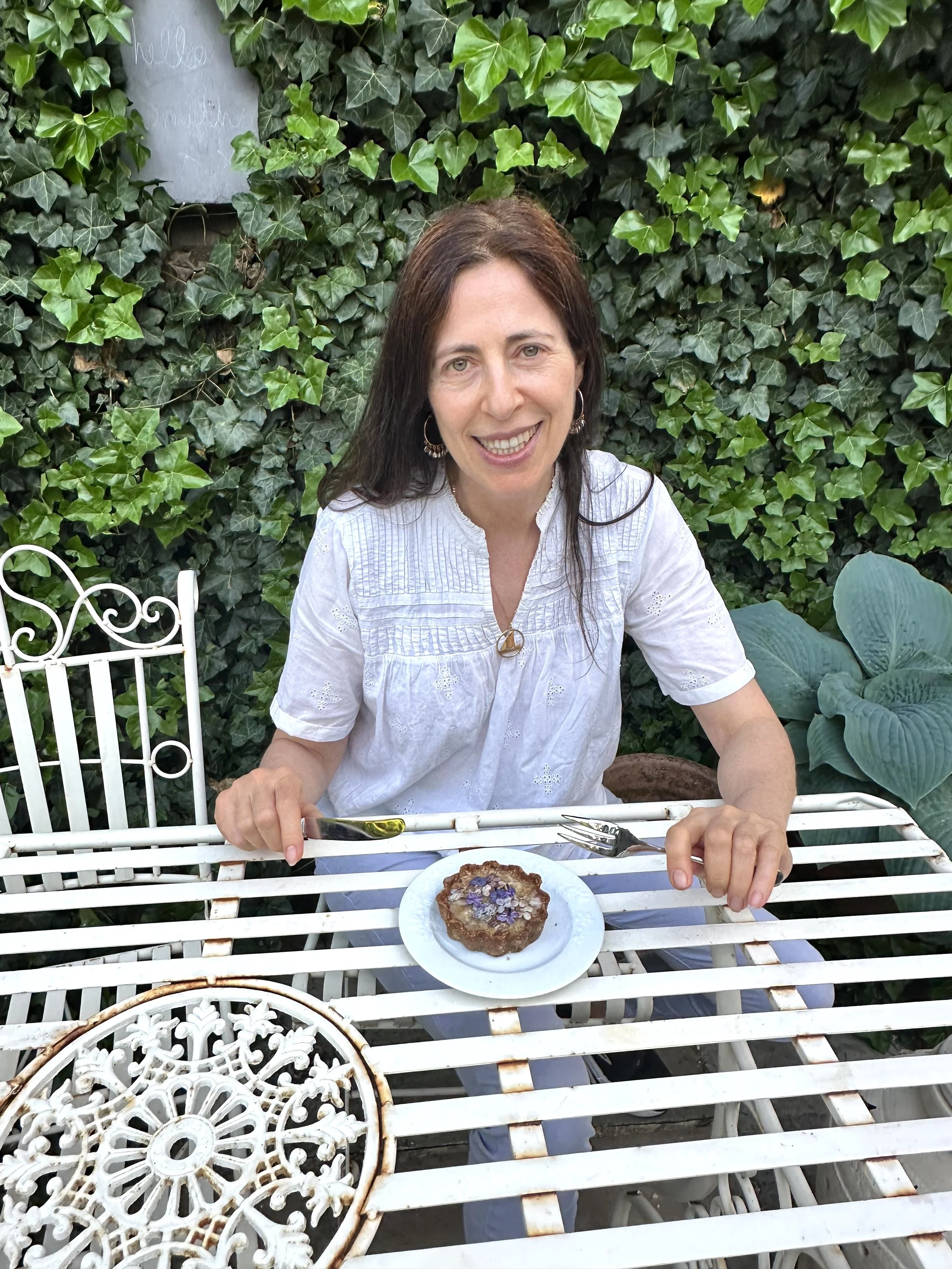
In case you were wondering about the medicinal uses of lilac flowers, there are not that many, however a tea of the flowers has been traditionally used by herbalists to break a fever or infused into oil and applied topically for minor joint pain. One of the most well known use for the flowers though, is as a flower essence. Lilac flower essence helps us accept that nothing in life is forever, and softens our attachments to people and outcomes, so whether you eat the lilac, sniff it or drink it, lilac supports us to go with the flow.
Wishing you all a joy filled spring or fall, depending on where you are reading this around the world.
Keep up to date with more current herbal stories at the Petalune Herbals Instagram page. And, in case you were wondering how it tasted….It was completely delicious and worth all the effort.